

World of Politics: Tech widens horizons – and reduces options
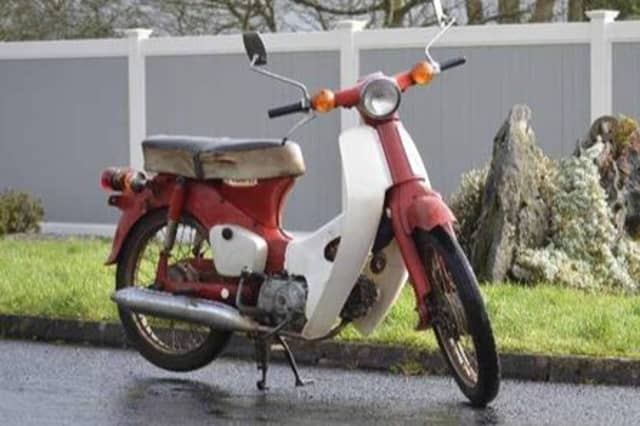

One of the best documentaries I have ever seen was on TG4; it was about the Honda 50, that humble little motorbike introduced in Ireland in the 1960s which had a transformative effect on the countryside.
For people who couldn’t afford a car, this new and cheap technology from Japan made distant towns accessible to those who needed to travel for work or to sell goods, including farmers bringing produce to market. It expanded people’s horizons, especially in rural Ireland, and gave them access to opportunities and communication they hadn’t previously experienced.
There are some great scenes in the documentary. One photograph showed a young fella on his Honda 50 with about six passengers on the back, two or three of whom were young women, all clearly on their way to a dance.
Another showed an old farmer who had attached a box to the back of the bike, apparently carrying about a dozen hens.
I’ve been to Africa a couple of times over the years reporting on development. In 2014, I went to Kenya to work on a project about M-Pesa, a mobile phone money transfer system. It predated smartphones and services like Revolut and other online payment platforms we use today.
People essentially used phone credit as a form of currency, transferring it to relatives hundreds of miles away—from Nairobi to the Rift Valley—or paying bus drivers and traders. It became an intrinsic part of the banking system and was transformative for the country. I remember reading around 2000 that only one per cent of Africa was connected by phone.
When cheap Chinese technology began entering African markets about 20 years ago, it had a revolutionary impact. Initially, many people couldn’t afford phones and instead bought SIM cards.
But once they gained access to a handset, distant markets became closer—much like the Honda 50 had done in Ireland—and communication became far easier. As a result, the isolation experienced by poorer communities around the world was significantly reduced.
I saw something similar a couple of years later in Zimbabwe: a one-wheeled tractor that was fascinating. It resembled a rotavator and was used to plough fields. Powered by a cheap Chinese engine, it was operated by a person who steered it like a wheelbarrow.
When cheap Chinese technology began entering African markets about 20 years ago, it had a revolutionary impact.
Its advantage was that it could harrow and sow seeds without disturbing the soil’s crust, protecting it from the sun. It was highly efficient: one machine could do in a day what four oxen would take a week to accomplish.
Again, this showed how new technology can transform people’s lives. Plenty of cheap motorbikes too; Honda 50 equivalents.
Of course, the major issue in Ireland and elsewhere today is artificial intelligence. A year ago, people were still talking about it; now it is everywhere and increasingly shaping daily life. I already know people who have lost their jobs because AI has replaced their roles.
Like many technologies, AI has both remarkable benefits and serious drawbacks. It will undoubtedly make many tasks easier, help people organise, and operate with speed and intuition.
In some ways, it will be like Google multiplied many times over—a powerful tool for exploring information, improving understanding, and executing tasks across almost every human activity.
However, there are significant downsides that cannot be ignored. One of these is energy use. At a time of global energy strain, AI is expanding rapidly. Because so much data is now stored in the cloud, the data centres required to support AI will grow larger and consume vast amounts of power.
The most serious concern is job displacement. While this has been happening since the Industrial Revolution, it accelerated dramatically when machines began replacing thousands of skilled craftspeople. This even led to resistance movements like the Luddites, who famously destroyed machinery.
We have seen similar patterns repeatedly: cars replacing horses, computers and calculators replacing manual calculation, and automated industrial processes reducing the need for human labour in both manufacturing and services.
In journalism, we have experienced a massive decline in newspaper sales and the advertising revenue that supported them
In journalism, we have experienced a massive decline in newspaper sales and the advertising revenue that supported them. Much of the profession now operates online. Print journalists are no longer confined to written work but also produce podcasts, videos, audio content, and social media. Entirely new forms of journalism have emerged that would have been unimaginable a decade ago.
The downside to AI is that it is likely to create a fundamental shift in the labour market. A recent Department of Finance paper noted that AI has the potential to significantly reshape employment over the medium to long term, with implications for productivity, job creation, and the skills workers will need.
It suggested that this transformation may already be underway here, given the country’s high concentration of workers in ICT and technical sectors—areas considered particularly vulnerable to automation.
A 2024 report found that Ireland’s labour market is more exposed to AI than those of many other advanced economies, with 63% of employment considered relatively exposed. The Department also noted that Ireland may be among the first advanced economies where the effects of AI on the labour market become clearly measurable.
While the report cautioned that it is too early to attribute these changes solely to AI, it nonetheless highlights the real potential for job losses—particularly among younger workers in highly digitised, technology-dependent sectors.
As for the Honda 50, you see few of them on Irish roads these days – long displaced by faster technology.
Harry McGee is political correspondent of the Irish Times.