

Coalition grasps political nettles early to limit their sting

For the first time in quite a while, we've had a situation where policy rather than personality, or governance, is the dominant theme on our domestic political landscape. The timing is no accident; I suspect the Government is trying to get all the deeply unpopular stuff and controversial changes out of the way now, at a relatively early stage of its term.
In quick succession, we have had two big policy change proposals, each of which has the potential to be incendiary in the Dáil and beyond.
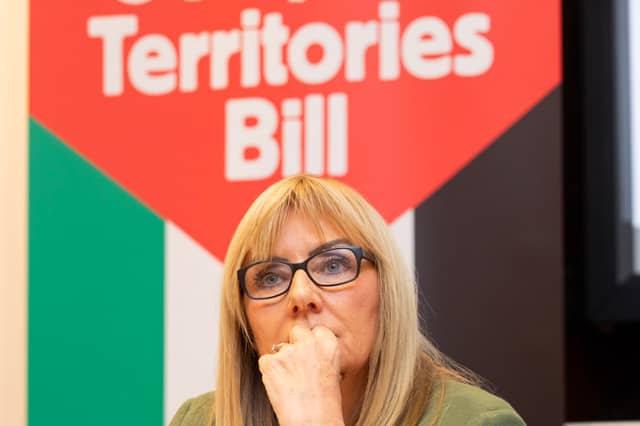
The first is the Occupied Territories Bill, which we've discussed before in this column. It was first published as far back as 2018 as a Private Members' Bill by independent Senator Frances Black and then lay moribund for years until the nightmare of Gaza started to unfold. It was then revived, first by the Opposition and later taken on by the previous Government in the run-up to the 2024 election.
However, its enthusiasm for the legislation was tempered by trepidation, particularly about how the United States might react.
There was a fear, if anyone had followed the antics of Donald Trump, that if the Government pressed ahead with the Bill and it attracted significant international publicity, there would be a huge backlash from the US, especially from the Republican side, which is strongly pro-Israel.
For Taoiseach Micheál Martin and his colleagues, there was a sense that enacting the Bill would be poking the bear. It could have introduced the Bill much earlier, at a time when no other European country was contemplating such a move. Instead, it long-fingered the whole exercise for years.
By the time the draft legislation was finally announced, several other European countries had already taken the initiative. It is now so late that the Bill is likely to have little more than a ripple effect internationally.
Hot on the heels of that has come another Government announcement: that it intends to push ahead with ending the Triple Lock. This, of course, is also a hugely contentious issue.
Catherine Connolly made no secret during her presidential campaign, and arguably since, that she is implacably opposed to ending the Triple Lock.
Many people on the left see the move in the context of Ireland eroding its neutrality and paving the way for it to join some military alliance, whether NATO or some form of Western European defence arrangement.
The Government insists that this is not the case and argues that the Triple Lock is no longer fit for purpose. On an objective basis, the Government is right. The UN Security Council has been hopelessly deadlocked. It has been well over a decade since any mission was sanctioned because somebody on the Security Council always exercises a veto.
Besides, the countries that dominate the Security Council — the United States, Russia and China — are hardly the states you would choose as sponsors if you were drawing up your political CV in 2026.
There was a really good forum a couple of years ago on peace and neutrality, with seminars in Galway, Cork and Dublin. The quality of the debate was excellent. It made people think seriously about something many had not examined for years: what does neutrality actually mean?
Unfortunately, Michael D. Higgins intervened before the event took place and dismissed it as something it ultimately was not. Neutrality today is very different from what it was when Éamon de Valera kept the country out of the Second World War.
Most attacks nowadays will not be conventional. They will come in the form of industrial espionage, attacks on underwater infrastructure, cyberattacks, propaganda operations, social media manipulation, the use of AI for disinformation and, perhaps, military attacks carried out not by armies but by drones and autonomous systems.
The hostile actor might not even be a state. It could be a movement, a criminal network or indeed a rogue state-backed group.
Catherine Connolly made no secret during her presidential campaign, and arguably since, that she is implacably opposed to ending the Triple Lock.
We also need to ask what happens if a European Union country is attacked. As a member of the EU, do we simply stay aloof and wash our hands of it, or are there ways we can assist without resorting to military action?
One problem with retaining the Triple Lock is that it could effectively mean an end of Irish participation in peacekeeping missions abroad. Those who defend it point to the possibility of using the UN General Assembly route, but that path has not been used in decades and, from my reading of it, is close to impossible in practical terms.
And so to the third big policy debate of the past few weeks. This arose from a decision by the Rotunda Hospital to allow public-only consultants, who already enjoy very substantial salaries, to take on private patients as well.
When the Minister for Health, Jennifer Carroll MacNeill, called them out on this, there was only ever going to be one winner. In a way, it united all the parties and brought the sometimes-neglected Sláintecare project back into public focus.
Carroll MacNeill, Simon Harris, Micheál Martin and other senior ministers came out strongly in defence of Sláintecare during the week, making a robust case for a public health system.
Indeed, one minister, speaking anonymously to one of the Sunday newspapers, described Carroll MacNeill as having a “socialist approach”. That’s the first time in her life she has been described in those terms.
In any event, the proposal was withdrawn. That outcome was probably inevitable, and it represented a victory for the Government and particularly Carroll MacNeill.
Perhaps this is all a flash in the pan. Maybe next week we'll be back to governance, gaffes, mishaps, slip-ups and speculation about who is knifing whom. But this week, at least, it was all about policy.