

Ombudsman report shows rise in Galway grievances

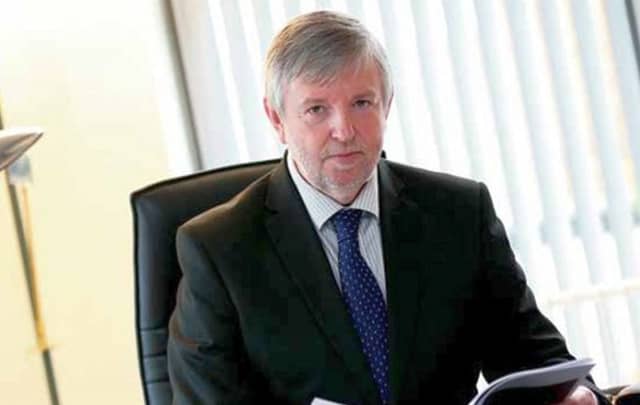

A total of 303 complaints were made from people living in Galway according to the Ombudsman’s annual report for 2017 – an increase of 19% in a year.
Some 48 of the 852 complaints about local authorities nationally were against Galway City Council – the fifth highest in the country. Complaints against Galway County Council were not far behind at 46.
During 2017, Ombudsman staff visited the Galway Citizen’s Information Centre where 64 complaints were received.
Of the 1,542 cases that were investigated thoroughly by the Ombudsman’s office, 27% were fully upheld, 3% were partially upheld, assistance was provided in 14% of cases, and 56% were not upheld.
Overall, in 44% of cases, members of the public directly benefited from contacting the office.
There are just two Galway cases mentioned among the case studies highlighted in the annual report.
One of them involves University Hospital Galway and their failure to accept a transfer of a patient from Letterkenny University Hospital for a urology review for 13 days - he died before being moved.
“The urology team in the regional centre accepted the man for transfer but his name was not added to the bed management list in the regional centre until 13 days later. The local hospital rang most days to see if a bed was available and wrote in the bed management log book ‘no bed’ or ‘not on list’,” according to the report.
“They were not aware, until the Ombudsman’s examination, that the man’s name had not been put on the list. At one stage the team in the regional centre said the man was not suitable for transfer until more tests were done. The family was not aware of this. It was clear that there was no agreed protocol covering the procedure for the transfer of patients between the two hospitals.”
After his name was finally added to the bed management list, he became too unwell to be transferred and he died.
The family’s complaint was upheld by the Ombudsman. Responding to the findings, the Saolta Hospital Group said it had committed to “finalising a Bi-Directional Patient Flow policy to streamline the process for transferring patients within the hospital group”.
“The importance of clear documentation and communication in arranging transfers was to be included in induction training for hospital doctors.”
The general managers of both hospitals wrote to the family and apologised, noted Ombudsman Peter Tyndall.
The other case centred on a complaint about flooding. A man lived beside HSE lands that flooded during periods of heavy rain resulting in an overflow of water on his property, damaging his percolation area and septic tank, which left his toilets and bathrooms inoperable.
The man said that the flooding was due to a broken concrete drain or culvert that ran under the public road. Both the HSE and Galway County Council informed the man it was the other’s responsibility.
In his investigation, the Ombudsman said the cause of the flooding was the broken drain and was the responsibility of the Council. The Council agreed to replace the existing drain and carry out remedial works to a nearby land owner’s property to prevent further flooding of the HSE’s lands. The works were part funded by the HSE.
In some case, the upheld complaints led to a windfall for the complainants.
A farmer who made a complaint when the Department sought to recover €27,550 from him in relation to a Rural Environment Protection Scheme payment won his case and got a full refund of the penalty after the Ombudsman found he was not informed about the correct procedures.
A man received €47,000 after his disability allowance was backdated by six years.