

Galway farmers warn support needed as upcoming weather 'could be problematic'

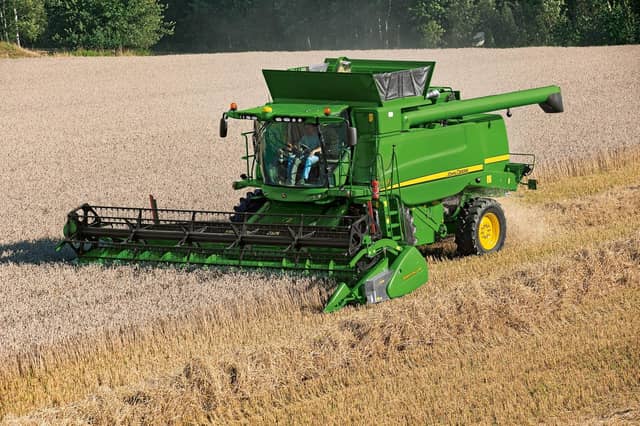

Some farmers in the county are already having to draw on winter feed supplies
Galway farmers could face winter feed shortages unless preparations are made now to deal with the impact of the prolonged dry spell, the county's IFA Chair has warned.
Michael Haverty said possible fodder supports should be considered, including identifying surplus supplies and measures to help transport them to farmers who may need them.
His comments come as Macra calls for the National Fodder and Food Security Committee to be urgently reconvened to assess fodder stocks, grass growth and regional pressures.
"We should be setting up a fodder support committee to see where there could be surplus fodder and an incentive scheme for the transport of it,” said Mr Haverty to Galway Live.
Mr Haverty said some farmers in the county are already having to draw on winter feed supplies.
“There are parts of the county that are suffering the same implications of the drought as some of their counterparts in the midlands and south,” said Mr Haverty.
“I know of dairy farmers in the county at the moment feeding their winder stocks of silage and meal to cows.
“It is a long time until May. You have to bank on housing cattle until the end of April.”
Mr Haverty said Galway's diverse land types mean the impact of the prolonged dry spell varies considerably across the county, with farmers on drier ground feeling the pressure more acutely.
“While it is impacting all parts of the county, some parts are more affected than others,” he said.
“We have such a diverse type of land in Galway. Headford, Caherlistrane and Turloughmore are all good dry land and they're feeling the pressure a lot more than Clonberne and Lavally, where I am, with more peaty soils.
"I have a lot of peaty soil and I'm keeping going. I haven't come under huge pressure yet, although I am just keeping grass in front of them. I wouldn't have surplus grass for bales or silage.
“Farmers on drier, sandier ground are really feeling the pinch. It is brown and burnt."
While recent rainfall was welcome, he said considerably more is needed.
"It is not enough,” he said. “We could do with two or three days of rain.
"As farmers, we're more often giving out about having too much rain, but this is the predicament you're in. The weather is a key tool. If you don't get that right, it is very hard to manage."
The concerns in Galway come against a much more difficult backdrop in other parts of the country.
"There are farmers down south under extreme pressure,” he said.
“In Limerick, some farmers have already fed two-thirds of their second-cut silage to the cows. They were hoping the weather would change in time to get another cut of silage before mid-September. If the weather doesn't change and growth doesn't come, there'll be no silage and the grass is gone."
Macra National President Josephine O'Neill has called for the National Fodder and Food Security Committee to be reconvened "without delay".
Ms O'Neill raised the issue directly with the Minister for Agriculture on July 22 and followed up in writing on July 29, amid concerns about fodder supplies for the coming months.
"We need an immediate assessment of fodder stocks, grass growth and regional pressures so that contingency measures can be put in place now,” said Ms O'Neill.
“Waiting until autumn or winter to determine the scale of the problem will simply be too late.”
While rain is badly needed, Mr Haverty said farmers in the west are also conscious that a sudden return to prolonged wet weather could quickly bring a different set of problems.
"Hopefully it will break,” he said.
“ At this time of the year it could be a long winter. If the weather broke now and you had torrential rain for a prolonged period, it might take two or three terrible wet days to wet it, and three weeks to dry it again."
Funded by the Local Democracy Reporting Scheme