

New book recalls Galway’s role in first All-Ireland hurling championship

Talking Sport with Stephen Glennon
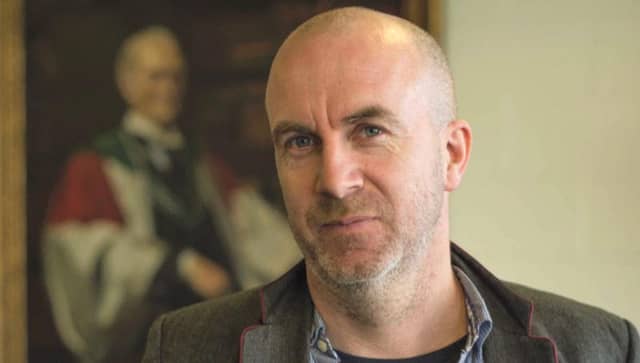
Galway’s role in the first ever All-Ireland hurling championship and, indeed, the founding of the modern game is one of the central themes running through a superb new book penned by UCD historian and former Offaly football manager Paul Rouse.
A cracking read, his book – The Hurlers: The First All-Ireland Championship and the Making of Modern Hurling’ – transports its readers back to the landscape of the 1880s when the game of hurling was fighting to survive in a country torn by political strife, colonialism and the land struggle.
At this time, hurling was played with no fixed set of rules in only a few isolated pockets, among which was South and East Galway. Consequently, Rouse’s narrative guides him across the Shannon and into the hurling heartlands of Meelick, Eyrecourt, Killimor, Mullagh, Kilbeacanty and Ardrahan.
Rouse’s prologue certainly sets the scene and draws in its readers. It is the day of the first ever All-Ireland decider on Easter Sunday, April 1, 1888 and “forty-two men stand in military formation on the roadway outside William Cunningham’s hotel in the middle of Birr”.
Within moments, the pre-match parade to the big game will begin, with 42 men – 21 from Meelick and 21 from Thurles – strutting their way down the streets of the Offaly town ahead of what would become a momentous day in the history of the GAA.
By 3pm, 3,000 supporters have gathered to bear witness and the referee calls in the two teams. “They lower the blades of their hurleys to the ground and set themselves to play. White (referee) takes the red leather ball into his hand and throws it in between the hurlers. Amid the jostling shoulders and swinging timber, the first All-Ireland hurling final is underway.”
From the parade down to the colour of the sliotar, Rouse captures the atmosphere. “If you look at it, the parade down the town is now the parade around the pitch,” outlines Rouse, as he takes time out of his lectures to chat to Talking Sport.
“Its origins come from people togging out in the back of pubs and hotels and marching through the towns – or marching from train stations – like a kind of pipe piper with banners and bands and hurleys across the shoulder, marching as if they are military off to war.
For more, read this week’s Galway City Tribune.