

Councillors warned Galway Civic Trust facing cash crisis


A cash crisis threatens the future financial viability of Galway Civic Trust, city councillors have been told.
Chairperson of the Trust, Jack Mulveen, has warned Galway City Council that the “survival of the Trust and its renewal is dependent on the appropriate steps being taken now and in the coming months”. It needs a cash injection of €43,000 next year.
The City Council reduced its funding to the Trust in 2018, which “caused liquidity problems”, according to Mr Mulveen, and as a result “we had to draw on our prudent reserves to sustain running costs”.
“These reserves have now been exhausted and our financial viability is questionable,” he said.
The “minimum required” every year to run the Trust is €35,000, he said, and in 2019 a “financial float” of €8,000 is also required to replenish the Trust’s reserves.
The funding crisis at the Trust is highlighted in a three-page letter from Mr Mulveen to city councillor’s ahead of the preparation of the local authority’s budget for 2019.
“While the Trust is looking for funds for its survival, we like to see these funds as an investment in the city as everything we undertake, the city is the beneficiary. We also want to make the connection with stakeholders, acting in collaborative partnership to implement a plan to make Galway more attractive to everyone,” he said.
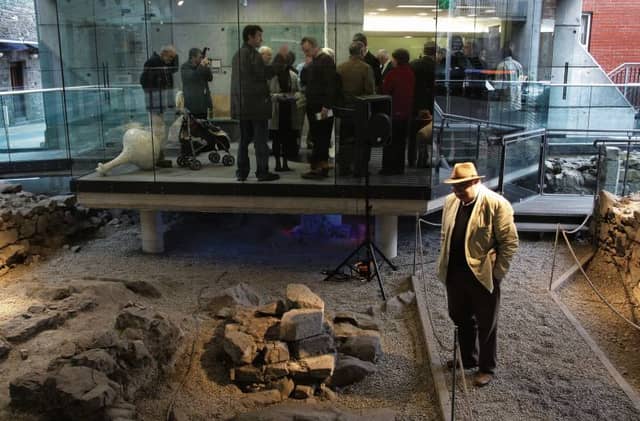
The Trust is responsible for historic buildings Fishery Watchtower Museum and Hall of the Red Earl, as well as putting on local events for National Heritage Week and Culture Night. It also manages a CE scheme, which includes projects such as the Circle of Life Garden in Salthill and Bádoiri an Cladaig.
Mr Mulveen outlined to councillors that the Board of the Trust has ‘changed tack’ following scandals that have come to light at the Trust.
“The recent adverse publicity in the media, albeit misconstrued, caused us to reflect on our function and ushered in a new approach or roadmap for the Trust. While we addressed and reversed the bad publicity, the experience taught us that our model of business is old and it requires radical reform for sustainability,” said Mr Mulveen.
He pointed out to councillors, who will ultimately vote on whether to fund the Trust or not, when the Budget comes before them next month, that the Trust, “has played an essential part of the promotion and enhancement of Galway’s built heritage”.
It has also “contributed to tourism by providing tourist leisure amenities to showcase the historic essence of Galway”.
Mr Mulveen outlined a ‘process of renewal’ for the Trust, which was a “new board, a new approach, a new way of doing business, a new Civic Trust”.
“We now believe the reconstruction of the Trust and not its demise is in the best interest of Galway. We want to embrace change by creating a more sustainable future and to share and take part in a plan for Galway that is achievable and beneficial. We want to build on the legacy of engagement; provide a platform of collaboration from other professionals for the benefit of Galway. We are seeking new acquisitions and targeting more historic buildings in need of refurbishment and creating additional tourist hubs or places of special interest in the city,” added Mr Mulveen.
The Trust was granted €50,000 from the Council every year from 2012 to 2016. However, funding fell by €10,000 to €40,000 in 2017 and the Trust received just €20,000 so far this year.