

City Council set to vote on overhaul of development levy scheme

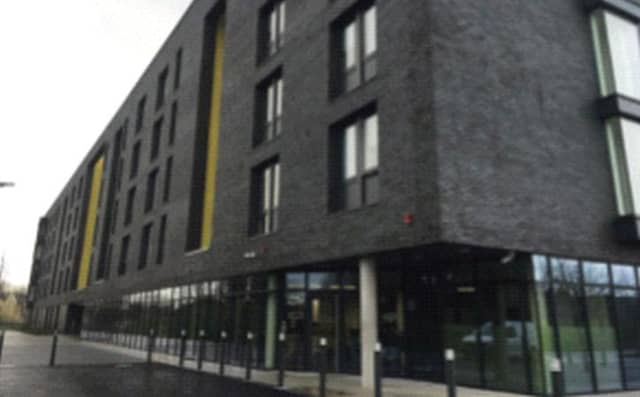

Galway City’s third level institutes face paying development fees for the first time under new plans being considered by councillors.
Under the new Draft Development Contribution Scheme, if passed, NUIG and GMIT would have to pay development levies on the construction of any new building projects, including student accommodation.
Historically, GMIT and NUIG were exempt from local development levies but the Chief Executive of Galway City Council, Brendan McGrath, and city planners, have proposed the introduction of a charge on third level educational-related development.
The proposed new scheme for 2021-27 would also result in an increase in levies imposed on developers of non-residential developments – in some case the increased could be more than double the existing rate.
And while the new scheme would push up the price of building larger homes in Galway City, it is proposing to lower the development levy on smaller homes and apartments.
Development levies are taxes on construction collected by local councils and used to pay for public infrastructure and facilities such as transport, recreation, community, and flood relief.
At the latest City Council meeting, Emma Silke, Administrative Officer with the Planning Department, gave an overview of the new proposed new Development Contribution Scheme.
Ms Silke said the new scheme proposes a flat rate charge of €90 per square metre of residential development.
She said this would result in extra development charges on four-bedroom semi-detached houses but smaller levies on smaller homes.
Under the existing regime, residential units over 125 square metres would be levied €10,831; this would increase by €419 or 3.9% to €11,250 in the new scheme.
Residential units of between 73-125 sq m are currently levied €9,739, and this would fall by 7.6% to €9,000 under the new plan. Residential units smaller than 73 square metres currently attract a development levy of €8,639, which would fall by €2,069 or 24% to €6,570.
Development levies for non-residential range from €41-€20 per square metre; but the new scheme would introduce a flat rate charge of €50 per metre square. She said that the new scheme “includes waivers for lower intensity uses” for non-residential construction.
Ms Silke said that the lower contribution for smaller homes was to encourage “compact growth and higher densities”.
The current Development Contribution Scheme in Galway City has been in place since 2008, with a change in 2014 to take out water and waste water charges. The new scheme must consider climate mitigation measures.
It was “timely” now to revisit the charges, to coincide with the review of new City Development Plan that is underway, she said.
City Council Senior Planner Caroline Phelan said that Galway “was out of kilter” with other local authorities who do apply development levies to third level institutes.
“They do have an income,” she said, and mentioned student registration fees.
Ms Phelan added that there was no reason why student accommodation should be exempt from development levies because they’re commercial entities that charge students rents.
Ms Phelan clarified that the State’s primary and secondary schools were not levied but fee-paying schools were.
She was responding to Cllr Declan McDonnell (Ind) who said he would not be in favour of levying NUIG or GMIT. Cllr McDonnell said the levies could add €50,000 or €60,000 to the cost of a new third-level educational building.
Cllr Terry O’Flaherty (Ind) was told a waiver for third level educational could be passed by councillors but that was not the recommendation of planners as set out in the scheme.
Cllr Colette Connolly (Ind) and Owen Hanley (SD) expressed alarm at the number of exemptions contained in the new scheme.
Councillors were told that just one submission was received from the public. This was from developer Gerry Barrett, but Ms Phelan said it related to the existing scheme rather than the proposed one.
When asked why there had been such little engagement from the public, Ms Phelan said that the proposal was out on public display for eight weeks, and was advertised on the Council’s website.
Developers and construction industry representatives would usually make submissions on such changes and she posited that perhaps the reason they did not this time was because they agreed with the changes.
Councillors will discuss the matter and vote on the proposal at the next meeting.