

Galway City memorial to honour ‘Galway Bay’ composer

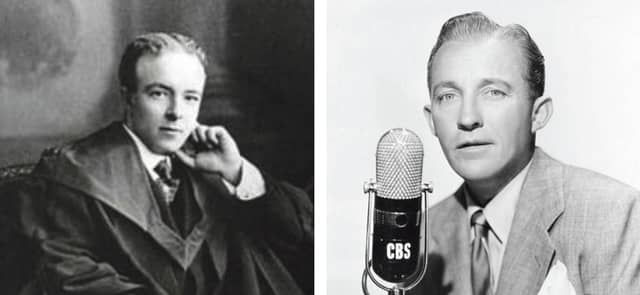

Composer of the world-famous song ‘Galway Bay’, Dr Arthur Colahan, will have a permanent place looking across the sea as Galway City Council has proposed a bench and plaque in his honour at Blackrock.
The song, which has brought a tear to the eye of the Irish diaspora for decades, became one of the best-selling tracks of its era, reaching third place on the Billboard chart and featuring in the 1952 film ‘The Quiet Man’.
The exact location where the song was written remains uncertain. Some accounts suggest Montpellier Terrace, while others point to The Vicar’s Croft on Taylor’s Hill, which offers views of Galway Bay.
Dr Colahan, a quiet neurologist who spent much of his career in Leicester, wrote ‘Galway Bay’ in the 1940s and it was later recorded by Bing Crosby.
After completing his Secondary education at St Joseph's College (The Bish), he began his studies at University College Dublin in 1900, first pursuing an Arts degree before turning to medicine.
He later transferred to University College Galway, graduating in 1913. While there, he was active in the Literary and Debating Society and took part in drama activities.
His medical career began at the County Infirmary in Galway, followed by a move to Holles Street. He later joined the Royal Army Medical Corps and served in India, where he was exposed to mustard gas.
After the war, he settled in Leicester, working there for the remainder of his career as a neurological specialist.
The recommendation to honour his legacy was brought forward by the Civic Naming Committee, where it was formally proposed by Cllr Donal Lyons (Ind) and seconded by Cllr Níall McNelis (Lab).
“This is very much welcomed,” says Cllr McNeilis.
“We proposed a bench in Blackrock to honour his memory, and it is a celebration of his work.”
Despite its global success, Colahan died in 1952, never knowing the full impact of his music. The song’s opening lines, ‘If you ever go across the sea to Ireland’ remain deeply evocative for Irish emigrants worldwide.
His story is tinged with tragedy: he was buried in an unmarked grave in Bohermore Cemetery, with little recognition given to his contribution to Irish cultural heritage.
In contrast, a plaque already exists at the Leicester home where he lived for many years.
Cllr Lyons, who supported the plaque proposal, noted the importance of finally acknowledging Colahan’s legacy in his native city.
"It is a fitting tribute to a man who put Galway on the map as regards the song Galway Bay."
Former City Mayor, Níall Ó Brolchaín, had made a similar proposal to recognise Dr Colahan almost two decades ago, in 2007.
Colahan’s catalogue extended beyond ‘Galway Bay’, with works including ‘Maccushla Mine’, ‘The Claddagh Ring’ and ‘The Kylemore Pass’.
Yet his most famous composition was altered without his knowledge.
Bing Crosby softened the political edge of the lyrics by changing “speak a language that the English do not know” to “speak a language that the strangers do not know.”
Funded by the Local Democracy Reporting Scheme.
Pictured: Dr Arthur Colahan (left), who composed 'Galway Bay', and Bing Crosby, who made the song internationally famous.