

Proteins for humans can be extracted from residue of our green grasslands

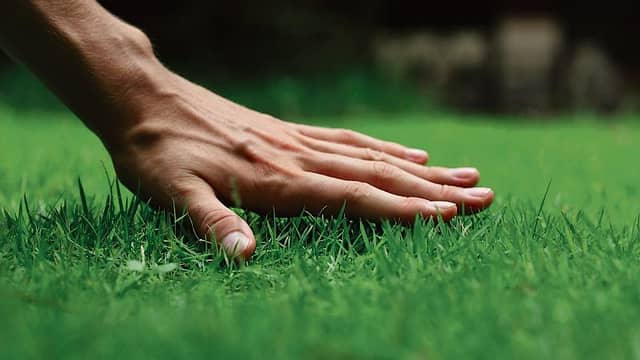

THE use of grass as a protein source in human food mightn’t seems a bit far-fetched as it sounds, following new findings by Teagasc researchers in Moorepark, Co. Cork.
A Teagasc research team at their Fermoy centre is working on a project aimed at extracting protein from mainstream crops such as clover, alfalfa and perennial ryegrass.
According to the latest edition of the Teagasc TResearch magazine, the early indications are quite positive in terms of separating the ‘human usable’ proteins from grass crops.
One of the researchers involved in the project, PhD student, Sara Pérez-Vila, said that green leaves contain high levels of an enzyme known as RuBisCO which is ‘a protein source with good nutritional properties’.
However, according to the Teagasc researchers, because green leaves also contain high levels of cellulose, hemicellulose and lignin – indigestible in humans – and extraction process for the ‘good protein enzyme’ is required.
Using laboratory methods, the Teagasc team managed to successfully carry out the separation of ‘the good and the bad’ from the grass in terms of human digestibility.
The Teagasc TResearch article also points out that with the world’s population set to rise from 8 billion to 10 billion between now and 2050, the demand for protein for human consumption will also continue to rise.
The research also indicated that regardless of which of the two extractions that were used to separate the ‘good protein’, the final product had a balanced amino acid profile.
This according to the Teagasc project meant that the new protein streams from grass and green leafed plants, ‘could become an alternative source of protein for food application with good nutritional value’.