

Lime key to land fertility

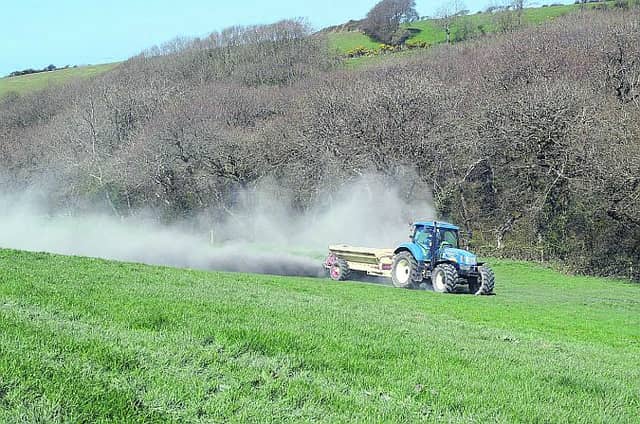

EVERY year, the same question is put to Teagasc advisers by farmers: "When is the best time to apply lime?” Well, very simply, the answer is now, while weather and ground conditions allow.
Spreading lime in the autumn will encourage growth in the coming Spring by releasing organic nitrogen and phosphorous from the soil, encouraging earthworm and microbial activity, increased uptake and utilisation of chemical NPK fertiliser by grass plants and tillage crops.
Also, spreading lime in the Autumn reduces the risk of lime being taken up in silage crops next year. Excess lime in mown grass will inhibit silage preservation resulting in poor quality fodder.
Importance of Lime: Lime is the foundation of all soil fertility, grass growth and livestock production. Lime, along with phosphorous (P) and potassium (K) are all essential grassland nutrients whose use has declined in recent years.
Ask most farmers when they last spread lime and will they remember? The low level of lime in the region, showing up in recent soil test results, will impact negatively on grass production in the coming years.
Lime can have a huge effect on animal thrive, resulting in extra liveweight gain and higher stocking rates. Lime supplies calcium and, in some cases magnesium, which is important for healthy bone development in livestock, for the production of milk and as a help towards reducing incidence of grass tetany.
Effects of liming: Lime improves sward quality. It is necessary to correct soil acidity and facilitate healthy plant growth. Soil acidity is measured on the pH scale of 0 to 14. The optimum pH for good grassland is 6.3 to 6.5.
Ryegrasses and clover perform best at this pH or higher but are replaced by lower productive grasses, such as Bent grass, when the pH drops below 6.0. 60% of soils in the region have a pH less than 6.0. Therefore, keeping grassland close to PH 6.3 is essential to maintain Ryegrasses and Clover in grassland.
If reseeding, lime increases the availability of nutrients (NPK) to grass seedlings. Any lime recommended on the basis of a soil test should be applied and tilled into the seedbed before sowing commences.
Liming promotes soil micro-organisms and encourages earthworm activity that break down plant and animal residues to release plant nutrients, especially nitrogen. It is estimated that by liming an acid soil (pH 5.5, up to 75kg to 80kg of free nitrogen,(48 to 64 units) is released from the soil per hectare annually over several years.
Also liming improves the availability of phosphorous to plants and aids its release from organic matter. At a time of high fertiliser prices, keeping soils at the recommended pH is a good investment.
With lime, the correct pH allows optimum use of other nutrients such as potassium (K) or potash. Lime is the cement in the mix of NPK that makes them available to promote plant growth.
For more, read this week's Connacht Tribune.