

Farmers have a critical role to play in improving Ireland’s water quality

By SINÉAD DEVANEY
“ALL sectors of Irish agriculture will have to implement practice change to achieve the desired improvements in Ireland’s water quality status”, Director of Research in Teagasc, Professor Pat Dillon, told a packed house at the Teagasc National Dairy Conference in Limerick last month.
In Ireland, water quality targets are set under the Water Framework Directive, which requires all waters to reach ‘good’ or ‘high’ ecological status by 2027. Currently 54% of Irish water bodies are of ‘good’ or ‘high’ ecological status.
Agriculture is a significant pressure in 1,023 of the 1,649 water bodies that the Environmental Protection Agency (EPA) has identified as being ‘at risk’ to water quality. However, two-thirds of these also have other significant pressures.
Agriculture is the main pressure affecting water quality in Ireland, given its role as the largest land-use in Ireland. The next greatest pressures then are hydromorphology (channelisation); urban wastewater and forestry.
So, we have great scope for improvement, and the agricultural industry and farmers have a big role to play in this. There are supports available to help.
Teagasc’s Better Farming for Water Campaign launch
Teagasc recently launched a Teagasc Better Farming for Water campaign highlighting 8-Actions for Change.
The ‘Better Farming for Water’ campaign will build on existing water quality programmes such as ACRES, ASSAP, Agricultural Catchments Programme, Farming for Water EIP, Waters of LIFE, Blue Dot Catchments, Slaney project (and others) to improve water quality.
The multi-actor (farmers, advisors/researchers, agri-food industry, community, government) approach to support farmers will ensure that challenges and solutions to address local water quality are delivered at farm, catchment and regional scale. This campaign is part of a wider whole-of-government approach to improve water quality.
The objective of the ‘Better Farming for Water’ campaign will be to support all farmers to reduce the loads of nitrogen, phosphate, sediment and pesticides entering our river network through either diffuse or point source pathways from agricultural sources.
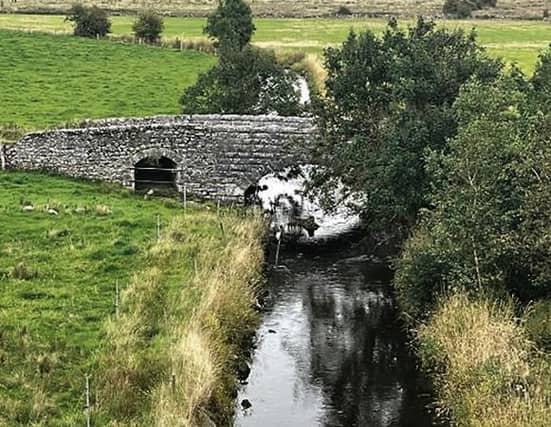
Pictured: Dooyertha River, Kiltullagh, Athenry.