

Cameras are an essential tool for calving/lambing

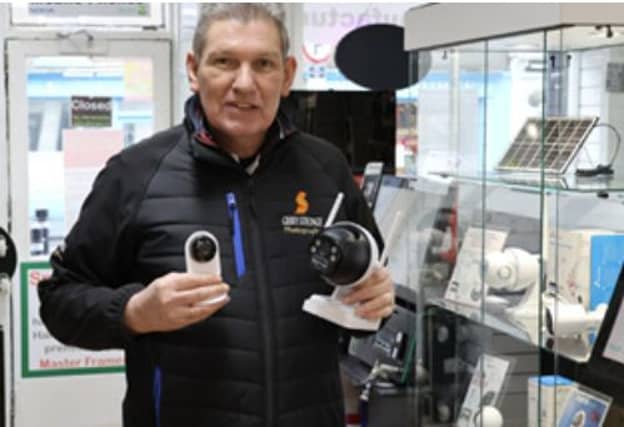

IT’S the time of year that dairy, suckler and sheep farmers look forward to with equal measures of expectation and dread – the start of the calving/lambing season.
One of the real breakthroughs over the past decade or so has been the increased usage of calving cameras, enabling farmers to view the calving shed from the living room or bedroom.
The cost of purchasing and installing cameras is not nearly as prohibitive as it had been in the early days, with the cost of the basic model now starting off at a very affordable €50.
Gerry Stronge, of Stronge Photography, Ballinasloe, told the Farming Tribune that these cameras are very user-friendly and offer great flexibility for the farmers.
“The camera works off electricity and wi-fi which can be worked from a static wi-fi box or broadband modem. This camera can be viewed on up to six devices ie mobile phones, laptops, or smart TV,” said Gerry Stronge.
As one ‘moves up’ in the camera range, there is a waterproof indoor or outdoor camera [the IP65] costing €110 which rotates 360 degrees and 55° up-and-down as well as having infra-red night vision while an extra €10 will provide two-way audio.
The next model also provides a full 360% rotation and a 90% up-and-down function, is fully waterproof, it can be used indoor and outdoor, is fully waterproof, with night-colour vision, motion detection, auto-tracking and many other features – it costs €250.
According to Gerry Stronge, the most popular model is the solar powered version which takes a data SIM card, can be erected inside or outside, with no Wi-Fi or electricity needed. It also has motion detection and a high-resolution lens.
“One of the great advantages of the current selection of cameras is that once lambing or calving is completed, they can be moved to your house or any other building, and used as security cameras for the rest of the year.
“Given the price and value of livestock and the low cost of installing cameras, I think that it is a no-brainer for any farmer calving cows or lambing down ewes – all cameras come with a two year warranty and can be delivered anywhere in Ireland the next day,” said Gerry Stronge.
According to the HSA [Health and Safety Authority], calving cameras can be a useful aid to reduce the risks around calving, enabling farmers to monitor cows from a distance as well as easingthe workload and fatigue involved in 24 hours pre-calving supervision.
"Cameras can also help to avoid disturbing the natural calving activity, particularly for heifers. Evening or night-time feeding may reduce, although not eliminate, the number of night calvings.
"For calving indoors, good lighting is essential for safety and efficiency in dealing with the birth. A minimum lighting level of 100 lux is recommended," the HSA state.
They also advise farmers to take all possible safety precautions in order to protect themselves from potential serious injury consequences.
"Almost one third (32%) of farm fatalities involving livestock, are from cows with calves, and over 50% of non-fatal farm injuries are now associated with livestock handling," the HSA website states.
The IFA also advise that the calving cow ‘is the most dangerous animal on the farm’.
■ For further information on calving cameras, Gerry Stronge Photography, Main Street. Ballinasloe, can be contacted at: 09096-45455.