

Deeply personal dance show explores nature of AlzheimerÕs

Date Published: 02-May-2012
When a gentle, loving father turns into an angry, aggressive man as a result of dementia, it takes its toll on a family.
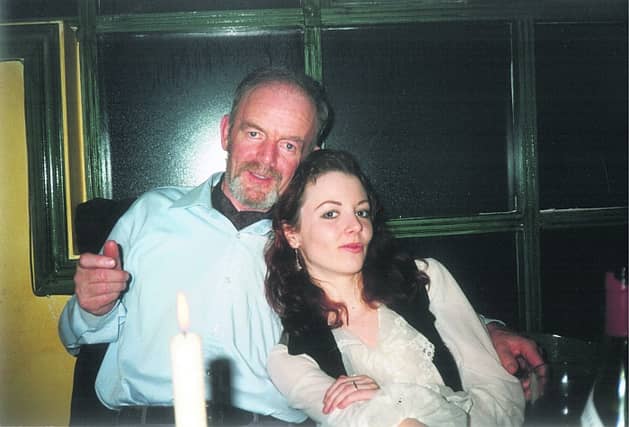
That’s what happened with Tom Hayes, father of Galway based dancer and choreographer Judith Sibley.
Between the ages of 60 and 70, the man who she can never remember saying a cross word to anybody, or swearing, “even in the car”, suffered a series of ‘mini-strokes’ and with every one, “he lost a little bit more of himself”.
Just before his 70th birthday, Tom had a massive stroke and although he recovered physically, he became very violent shortly afterwards, leaving his wife Sheelagh “a prisoner in her home”.
His journey through Alzheimer’s and the impact on his family has now been captured by Judith in a new dance piece, The Space Where Thought Once Was. This piece, which she has created and choreographed, will be performed by her company, Chrysalis Dance in Galway’s Black Box Theatre on Friday next, May 11 as part of a double bill.
“The cast are phenomenal,” she says of the four dancers who are performing this piece. “They have taken full responsibility for everything I have given them and don’t throw anything away.”
It’s very personal to take something as real as Alzheimer’s and turn it into a dance piece and, to ensure that Judith had captured the essence of the story, Chrysalis – which is one of Ireland’s leading dance company’s – first rehearsed it and staged it last summer in front of an invited audience at the Town Hall Theatre studio. The response was overwhelmingly positive. Now it’s on a national tour, and Judith feels the subject matter means it will appeal to people who wouldn’t normally go to dance shows.
Sometimes this piece is a representation of the people who are watching the person with Alzheimer’s; at other times it’s following the person with the illness.
“I’ve watched my dad with the illness and since he has gone into care in Athenry, I have watched other people,” explains Judith of the creative process.
She noticed that many people with Alzheimer’s have a particular walk, where they carry their weight on the balls of their feet. And they will walk around in circles for ever. Some homes have circular walkways for that reason.
There are also particular tics; for instance “dad would rub his leg with one finger, like you’d rub a cat”, Judith recalls.
The piece also explores the distress caused to a family when a sufferer becomes violent as happened in Tom’s case.
“For the last few months before he went into care, it was very stressful,” Judith recalls. He kept escaping from the family home in Lackagh and telling everybody her mother was mad. Because he looked fit and respectable, strangers would believe him. More worryingly, he also pushed and beat Sheelagh, behaviour that was totally out of character from the man she had married. Judith believes this may have been his rage at not being able to understand what was happening to him. Her own baby daughter, who was just over a year at the time, was learning new words while Tom was losing his grip on language. It was all very distressing, especially as he had been such a vibrant person – in his youth Tom had managed the Dubliners.
For more, read this week's Connacht Tribune.