

Data protection frustrating efforts to tackle illegal dumping
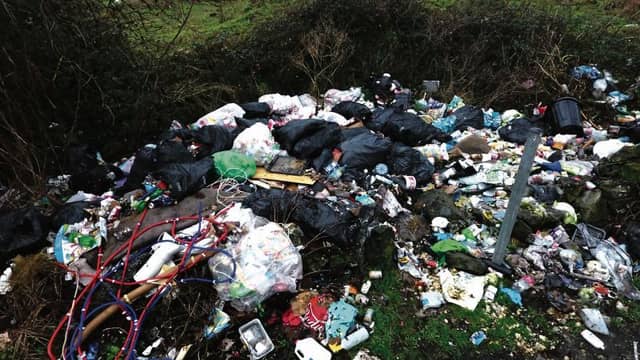

Data protection red tape is blocking those trying to tackle the scourge of illegal dumping, a meeting of County Galway Joint Policing Committee (JPC) was told.
According to Cllr Shaun Cunniffe (Ind), councillors have been told that new bylaws to regulate the collection of waste will be restricted due to General Data Protection Regulation (GDPR) – as waste collectors will not be able to divulge the names of those who have contracts with them.
Furthermore, Cllr Cunniffe said a list of those who are disposing of rubbish correctly would be useless, adding that until there is a “TV licence-style” waste collection register, there would be a reliance on community clean-ups to stop the countryside becoming a haven for fly-tippers.
“If the waste disposal companies were to inform us of those who have a waste disposal contract, you would only have a list of those who are compliant.
“We need to confirm how people dispose of waste and ensure that it is compliant with the waste disposal regulations,” he continued.
Cllr Cunniffe said that having been involved in various community clean-ups, and bearing witness to the work that community groups like Tidy Towns do, he was often left wondering if he was “mad” to be cleaning up other people’s rubbish.
Senior Executive Scientist with Galway County Council, Ann Dolan, said Council resources were stretched to the limit dealing with illegal dumping and said there was to be a move away from community clean-ups – with local authorities tasked by the instructions from Government to come up with more effective means of eliminating fly-tipping.
“The Department has said . . . they don’t want funding used for cleanups. They don’t see the value in it and personally, myself, I don’t either.
“We’re just moving the problem – moving it from one road to another,” said Ms Dolan.
Chair of the JPC’s Illegal Dumping and Litter Awareness sub-committee, Cllr Michael ‘Moegie’ Maher (FG), told members that GDPR was also making it difficult to secure the erection of CCTV cameras at dumping hotspots – but the message that those caught would be “crisply fined” was getting out.
The Council has not yet appointed somebody to monitor CCTV and that was something he said was a priority for the sub-committee.
Cllr Maher suggested mirroring a community effort in Limerick where Good Friday would be used as a county-wide clean-up day.
“It is a great initiative for Galway to follow suit,” said Cllr Maher. “If we all came together for two hours that day, we could clean the county.”
Cllr James Charity (Ind) said that while community efforts were great at promoting collective responsibility, it was not good enough that the many were expected to clean up for the few.
“This is wanton and deliberate vandalism,” said Cllr Charity, adding that the confusion over GDPR were making it impossible for CCTV to be effective.
Taking the N84 Headford Road as an example, he said there were 10,000 cars per day travelling that road – and if GDPR required the permission of every driver to record their data because of the dumping site’s position next to the road, CCTV could not be used.
“This is a legislative issue and the Oireachtas needs to deal with it,” he added.
Chair of the JPC, Cllr Pete Roche (FG), said where there is currently CCTV installed, a more concerted effort needed to be made to extract the footage when illegal dumping occurred.
“The company that installed the CCTV cameras are not efficient enough in coming out and removing the chip to identify the perpetrator,” said Cllr Roche who explained the footage “eats its tail” after a relatively short period of time.