

Two friends keeping one big tradition alive on Galway island

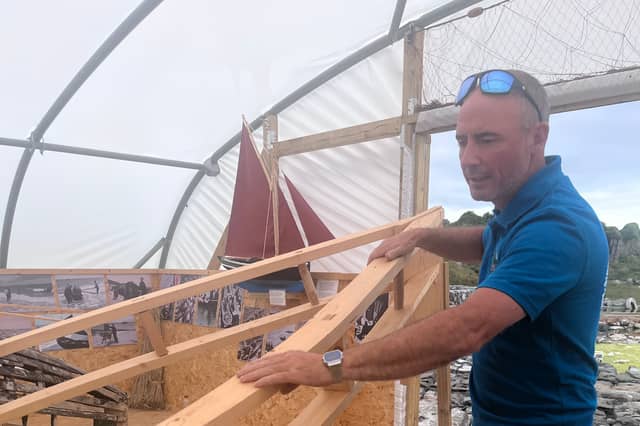

They are trying to keep the tradition alive and to show people the importance of its history
For as long as they can remember, lifelong friends Tomás Sharry and Máirtín Seoighe have been surrounded by currachs on Inis Oírr.
As children, they fished with their fathers, raced in local regattas, and were either mending or breaking the traditional Irish fishing boat.
"We have grown up with each other since we were knee-high," says Máirtín.
"We were always around currachs. You were either playing on top of them, sleeping under them, breaking them or fixing them."
Now in their forties, both men are part of the last generation on the island to remember when the currach was more than a racing boat.
Historically, every household on Inis Oírr owned one. Before electricity and running water arrived in the mid-1970s, they were as much a part of island life as the sea itself.
They carried families across to Doolin and Galway, were used for fishing, bringing livestock ashore, carrying cargo from the Naomh Éanna and transporting everything a community needed to survive.
"It was your only way of getting to and from the island," Tomás says.
"Every family had a currach. The man of the house would have been a fisherman. That was their livelihood."
Then, slowly, the currach disappeared from daily life.
Fibreglass boats replaced canvas and timber. Modern piers allowed cargo ships to dock.
Licensing and insurance became easier for factory-built boats, while handmade currachs became harder to keep on the water.
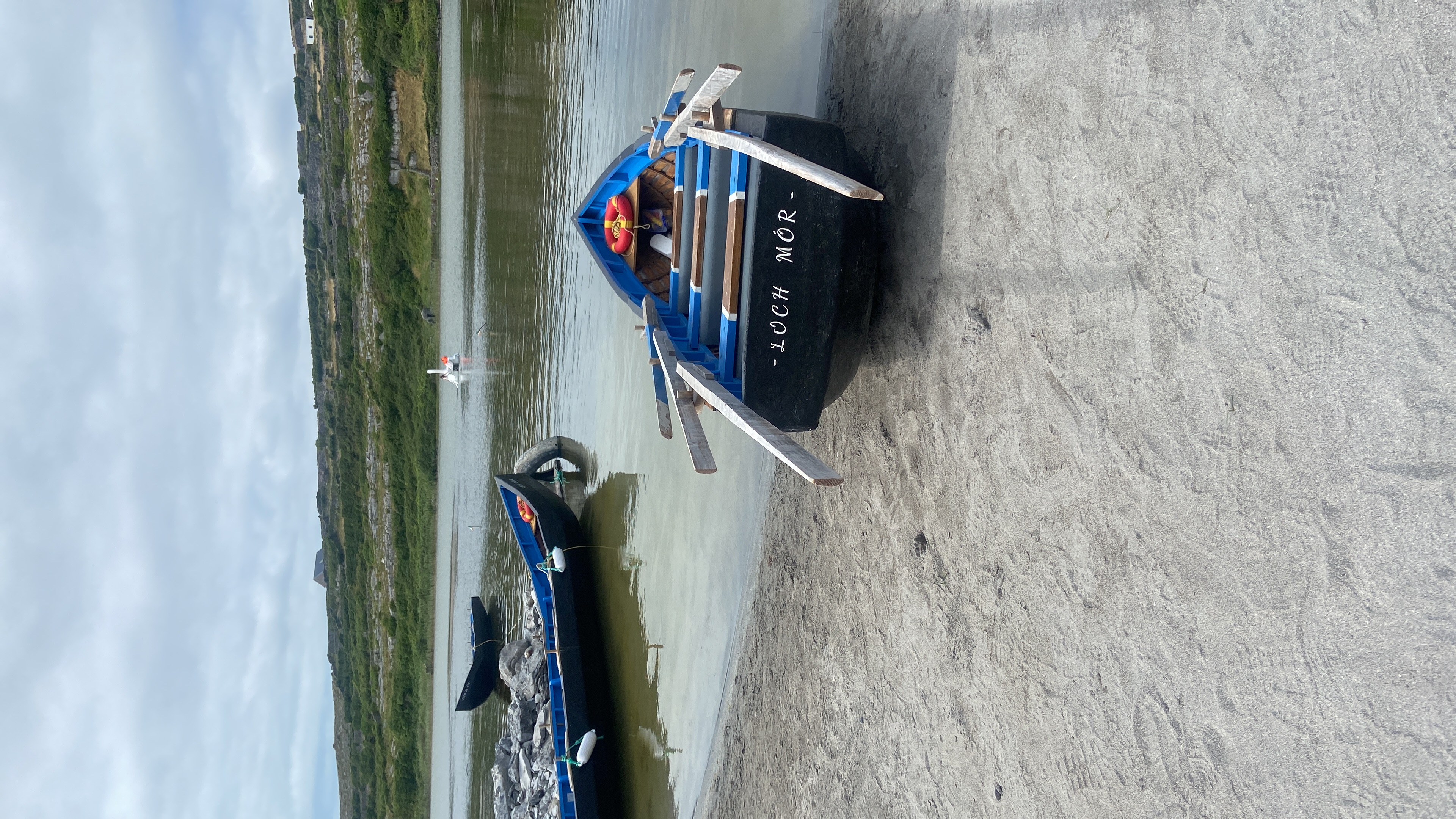
Once regular ferry services arrived, the currach's role shifted. By the 1990s, most had disappeared except for racing.
“Since we got electricity and running water in the mid-70s, the island has progressed a lot,” says Tomás.
“Before that, it was stuck in time for generations. Now, we have the same as any town on the mainland. We are really lucky. Before this, the currach was your only way getting to and from the island. It was a huge part of island life.”
Tomás began to realise what had been lost while working on the Doolin ferry. Visitors were endlessly curious about the black boats lying on the beach.
"They were always asking about the overturned boats," he says.
Then came another realisation.
"My own kids would never have seen the currachs being used for what they were built for," he says. "All they've known is the regattas."
The currach was no longer essential to survival. That thought stayed with him.
"We're trying to tell the story of the currach, to keep the tradition alive and show people what they were used for and how important they were," says Tomás.
Both Tomás and Máirtín often spoke together about Loch Mór and how little use was being made of the sheltered lake in the middle of the island.
In April this year, the pair opened the Aran Currach Experience, giving visitors the chance to learn traditional currach-building techniques before taking to the waters of Loch Mór.
"We didn't give it a whole pile of thought," Máirtín says, laughing.
"If we did, we probably wouldn't have done it at all. We said we'd do it and see how it goes."
The response has surprised them.
"You doubt yourself at the start," Máirtín admits.
"You think, 'What are we after doing?' Then people started to come, bit by bit. They're telling each other about it. We haven't had anyone yet who has been disappointed."
The project secured funding from LEADER and is as much about preserving heritage as it is about boats.
Tomás speaks of his father, Tomás Ó Sharry, who first taught him to fish and handle a currach.
"I used to row with my father since I was able to go," he says. "He showed me how to row. I used to fish with him."
His wife, Bríd Ní Dhonnacha, principal of Coláiste Ghobnait on Inis Oírr, is one of his biggest supporters, and they have three children, Caoimhe, Amy and Kaila.
For Máirtín, the connection also lies in boat building.
His father, Peadar Seoighe, built four identical currachs for the island's regatta committee in 1998 while Máirtín built his own full-sized currach for his Leaving Certificate project.
One of the original boats almost ended its days as firewood after being damaged in a storm.
Instead, it now forms the centrepiece of the workshop at Loch Mór, where visitors can see the exposed ribs and timber laths that reveal how a currach is made.
And two of those boats are on the lake, giving visitors a chance to experience rowing in the traditional vessels on Lough Mór.
“I was helping him at the time as a young fella,” says Máirtín.
“We were just out the back yard and I got the bug. They were all just knocking about. We refurbished them and fixed them up a lot over the years and were always involved in racing every summer.”
Máirtín delights in telling visitors about 'Turn na Sagart', the rota by which every household took its turn rowing the priest between Inis Oírr and Inis Meáin, so that Mass could be celebrated.
"The priest would say Mass has to be said," he laughs.
"The currach owners might say, 'Not today, it's too bad.' There were a few hairy landings. They broke a few currachs coming in and out, but nobody was lost."
Those are the stories Tomás and Máirtín want to keep alive - an understanding that these boats once carried the weight of an entire island community.
Already, islanders have begun donating old photographs, tools and family artefacts connected with currachs.
Local schoolchildren are learning to row. The workshop is slowly becoming a place where heirlooms and memories are being gathered before they disappear.
“It's great to keep the history, culture and tradition alive," says Máirtín.
“It is a huge part of the heritage of the island,” agrees Tomás.
“I don't think there is anywhere you can go through the history of the build and the connection to the island.”
You can find more information on the Currach Experience here.