

Lough Mask murder convictions campaign brings Galway case to Oireachtas

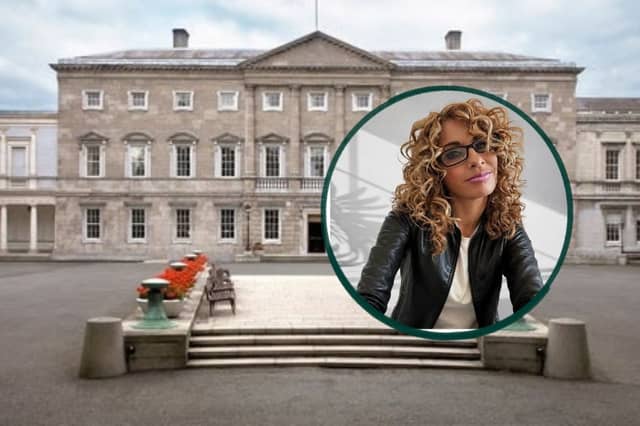

In his final plea from the dock, Michael Flynn of Middle Cloghbrack, near Clonbur, declared he was “as innocent as the child unborn” and hoped Ireland was listening before he was sent to the gallows at Galway Gaol for the Lough Mask murders in 1883. More than 143 years later, his third great-granddaughter is still asking Ireland to listen.
Now Erin Flynn’s campaign for an independent examination of the evidence that sent her ancestor and two other Connemara men to the gallows has officially made it before a parliamentary committee.
The Pennsylvania-based campaigner received confirmation that her correspondence regarding the Government’s pre-1922 policy and the Lough Mask case was considered by the Oireachtas Joint Committee on Justice, Home Affairs and Migration at its meeting on September 2.
“The Committee agreed that the correspondence be noted, so it has officially made it before the parliamentary committee now,” Erin said.
Erin had written to the Committee asking it to scrutinise the Government’s 2026 policy on pre-1922 convictions, with specific regard to the Lough Mask trial of 1882.
In a letter confirming the development, she was advised that the correspondence had been considered at the September 2 meeting.
The Committee agreed that it be noted and said it would contact Erin should any further information be required.
It is the latest development in a campaign which began with one descendant seeking answers about the conviction and execution of her Galway ancestor and has grown into a wider challenge over how Ireland deals with possible miscarriages of justice which occurred before the foundation of the State.
Michael Flynn, Thomas Higgins and Patrick Higgins (Long) were convicted of murdering land agent Joseph Huddy and his 17-year-old grandson John after the pair disappeared while serving eviction notices in the Clonbur and Cornamona area in January 1882.
Their bodies were subsequently recovered from Lough Mask.
Patrick Higgins (Long) was executed on January 15, 1883, while Michael Flynn and Thomas Higgins were hanged at Galway Gaol two days later.
All three went to their deaths protesting their innocence.
“Descendants of all three executed men continue to maintain their innocence, as they have for one hundred and forty-three years,” Erin said in a letter to the Minister of Justice Jim O'Callaghan TD.
Erin has consistently stressed that she is not asking for their innocence to be presumed.
She is asking for an independent expert examination of the evidence which secured their convictions.

Her original request to the Department of Justice was declined following the introduction of a Government policy in March which limits consideration for presidential pardons to convictions imposed after the foundation of the State.
Erin subsequently challenged that decision, arguing that whether a presidential pardon can ultimately be granted is separate from whether the historical evidence itself can be independently examined.
“My request was not simply for the Government to issue three posthumous pardons,” she wrote.
“I specifically requested an independent historical review of the evidence surrounding these convictions.”
Erin has since established The Pre-1922 Justice Project and launched the ‘Don’t Silence the Evidence’ campaign.
She has also said she is prepared to take the battle as far as the High Court if the Government’s position remains unchanged.
“I am willing to go as far as the High Court with this,” she previously said.
Already a precedent for investigations
Independent examinations of other 19th-century convictions have previously resulted in posthumous presidential pardons.
Myles Joyce, who was hanged following the Maamtrasna murders in 1882, received a posthumous presidential pardon in 2018 after an independent expert review concluded that his conviction was unsafe.
Sylvester Poff and James Barrett, who were hanged at Tralee Gaol in January 1883 – just six days after Michael Flynn’s execution – received posthumous pardons in 2024.
“The parallels with the Poff and Barrett case are exact,” Erin wrote in her letter to the Minister for Justice, Jim O'Callaghan TD.
“Those convictions, from the very same months as my ancestor's, were found unsafe because they rested on the circumstantial and contradictory evidence of a single witness, heard by a packed jury, while other lines of inquiry were neglected.
“Each of those defects is present in the Lough Mask case, and is documented not in family tradition but in the official record of the Dublin December Commission of 1882, the full trial transcript of which survives and is publicly available.”
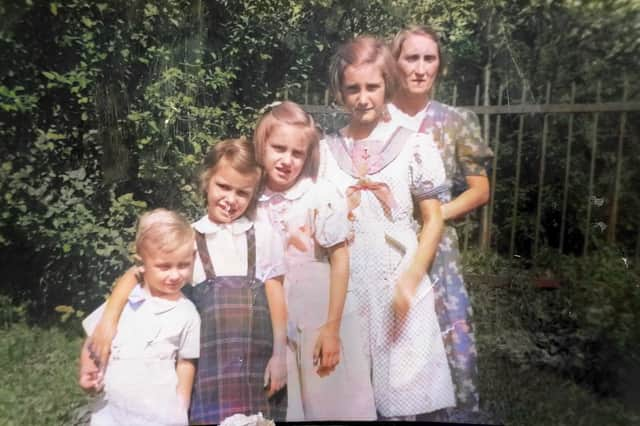
For Erin, the distinction at the heart of her campaign remains between asking for a pardon and asking for the evidence behind a conviction to be examined.
“I am not asking for innocence to be presumed,” she previously wrote. “I am asking for the evidence to be examined.”
The Committee’s decision to note her correspondence does not mean it has agreed to investigate the Lough Mask convictions or endorsed her challenge to Government policy.
But it does mean that the campaign surrounding three men sent to the gallows in 1883 has now formally reached the Oireachtas committee dealing with justice.
And it brings the story back to the words attributed to Michael Flynn before his execution more than 143 years ago.
In her original submission to the Department of Justice, Erin answered her ancestor’s hope that Ireland was listening with a plea of her own.
“Flynn's final words from the dock were that he was as innocent as the child unborn, and that he hoped Ireland was listening,” she said.
“I respectfully ask that Ireland listen now.”
Campaigner prepared to take pre-1922 justice battle to High Court
Erin is prepared to go as far as the High Court to challenge a new Government policy which rules out presidential pardons for convictions dating from before the foundation of the State in 1922.
The Pennsylvania-based campaigner has accused the Government of closing the door on examining possible historical miscarriages of justice following the policy change in March.
Her request for an independent expert review of the convictions of her ancestor Michael Flynn, Thomas Higgins and Patrick Higgins (Long) has been declined by the Department of Justice.
The three men were executed for the Lough Mask murders in 1883.
Erin has now established The Pre-1922 Justice Project and launched the ‘Don’t Silence the Evidence’ campaign.
I'm like The American Irish Banshee. Once I start going I don't give up!
She argues that the Government’s position on pardons should not prevent independent examination of historical evidence.
Under the new policy approved by the Government in March, only convictions imposed after the State's foundation are eligible for consideration for presidential pardons.
Minister for Justice Jim O’Callaghan has said pardons should apply where a miscarriage of justice occurred “under the auspices of the State”.
Mr O’Callaghan has also stressed that there must be very strong evidence of a miscarriage of justice before a presidential pardon can be considered.
“I am not asking the State to take responsibility,” Erin said.
“We were silenced by the Crown before and now silenced by the Irish Government in 2026.
“That does not sit well with me.”
In its response, the Department said her request for an independent historical review was declined because of the new policy.
Erin subsequently challenged the decision in writing.
“My request was not simply for the Government to issue three posthumous pardons,” she wrote.
“I specifically requested an independent historical review of the evidence surrounding these convictions.”
She asked: “Why can the historical evidence itself not be independently reviewed?”
Erin points out in her correspondence that the Constitution does not contain an express 1922 cut-off and has asked the Department to identify what prevents an independent historical review of the convictions.
In recent years, examinations of 19th-century convictions have led to posthumous pardons for Myles Joyce in 2018 and Sylvester Poff and James Barrett in 2024.
“I don’t know where they got the 1922 date,” Erin said.
“I pointed out the flaws in their policy.”
Erin is not seeking to have historical convictions automatically overturned.
“A lot happened back then,” she said. “We need to find out if the evidence is actually there.”
In her written challenge to the Department, she put that distinction plainly.
“I am not asking for innocence to be presumed,” she wrote. “I am asking for the evidence to be examined.”
And if the Government’s position remains unchanged, she says she will continue to pursue the issue.
“I'm like The American Irish Banshee,” she said.
“Once I start going I don't give up!”
Funded by the Local Democracy Reporting Scheme.