

Comedy and tragedy converge in fresh production of Uncle Vanya

Date Published: {J}
By Darragh Mc Donagh
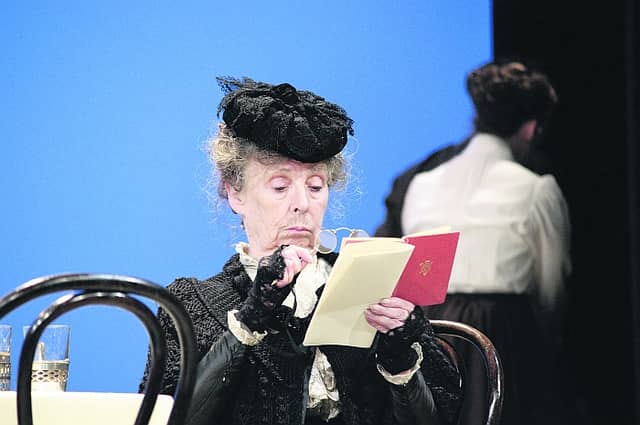
Laughter and sorrow are set to exquisitely converge in a moving production of Anton Chekhov’s bleak classic Uncle Vanya by the Bristol Old Vic and Shakespeare at the Tobacco Factory at the Galway Arts Festival this month.
It is difficult to envisage how comedy could be extricated from the collective misery of the play’s characters, who conjure a sense of inescapable sadness as they each recount their lives’ regrets in the ruinous surrounds of a 19th century Russian estate. However, director Andrew Hilton expertly braids humour and darkness in this fresh adaptation of the masterpiece and insists that the comedic aspect that had originally been intended by Chekhov has been lost in many productions of the play.
“There seems to be a theatrical need to turn Chekhov into tragedy and that is wrong,” he said. “Chekhov himself objected to attitudes to his work that suggested there was necessarily a melancholy tonal wash.”
Constanin Stanislavski, who produced Chekhov’s plays in the late 19th and early 20th centuries, did not see eye-to-eye with the playwright as to how they should be performed, and the conflict gave rise to a debate that has continued to this day.
“Chekhov believed that his plays were funnier and lighter than Stanislavski, who was an actor himself and played Astrov in Uncle Vanya for around 30 years. Chekhov objected strongly to his portrayal of the parting scene as a tragedy,” explained Hilton.
The chasm between the intended meaning of the play and the way in which it was misinterpreted was also evident in an exchange with the Russian censor, who scribbled in the margins of act three, in which Yelena and Astrov kiss, that he objected to the display of passion.“Chekhov wrote back and said: ‘What passion?’” recalled Hilton. “There was no passion because they knew at that stage that it was over and were really just kissing idly to pass the time.”
Hilton, having gained a reputation in the UK for telling an old story in a new way, has cast aside dreary past productions of the play to excavate and polish the masterpiece, presenting it in a way that its author had intended.
“The challenge for me was neither to lighten the mood of the play nor darken it but to approach it with no assumptions as to its meaning or any preconceived idea of the prevailing mood of the play, and try to be completely detached,” he said.
For more, read this week's Galway City Tribune.