

Cœirt plays host to one of top names in British journalism

Date Published: {J}
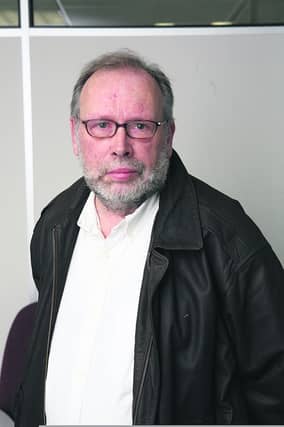
He lives in London with a background rooted firmly in Scotland, yet writer Ian Jack, who will take part in next month’s Cúírt Festival of Literature, has barely answered the phone for our interview when he asks when the Galway-Limerick railway line will be re-opening.
“I’m fascinated by railways,” he says by way of explanation. Truth to tell, The Guardian columnist, former editor of the renowned Granta magazine and co-founder and editor of England’s Independent on Sunday, is interested in most things.
On April 24 he’ll be reading from his latest book, an evocative collection of essays entitled The Country Formerly Known as Great Britain, and then discussing it with Fintan O’Toole, Irish Times columnist and author of Ship of Fools: How Stupidity and Corruption Sank the Celtic Tiger.
Part of the book details the cultural climate that Ian, who was born in 1945, caught the tail end of and that his parents belonged to. That began to disappear in the 1950s and was nearly dead by the 1980s, he says.
“Britain had been an empire and had a distinct civilisation compared to Europe and North America, most of which has now disappeared, for good or ill.”
When he was a child – in fact well into his adulthood – Scottish nationalism didn’t exist. Despite that, there was a civilisation in Northern Britain that was separate from the rest of the UK territory. It was based on heavy industry, in a place where the Protestant religion was hugely important and where there was a non-metropolitan view, he says. It was a place where people regarded themselves as being superior to Londoners in some ways.
But even during his childhood, it was falling apart. The Clyde shipyards were closing and the Lancashire woollen mills were closing. As Ian points out, he grew up between two epochs.
That’s what the book is about but it’s not nostalgic. Nor is it a political or economic treatise. One piece recalls the year, 1956, when he and his parents ate a tin of baked beans that also included sausages – a memorable first experience. This is a book in which the daily details of British life in the late 20th century are catalogued in fonddetail, a book where the past shines a light on the present, warts and all.
“There are many reasons not to want the 1950s back but if there is anger in what I write, it’s because the working class, or the skilled working class – people like my parents – had a very thin time for no great reward,” Ian says.” They were betrayed by the British political elite who weren’t interested in the old ways of making money, such as manufacturing. Margaret Thatcher has got a lot of bad press and I don’t want to vilify her any further, but she was in large part responsible for people following the idea that Britain could make a living from marketing and financial capitalism rather than manufacturing.”
He sees many similarities between Ireland and Britain “as if an economy based on buying and selling houses could make you rich”.“There is so much anger now, but what do you do with the anger. There has been very little discussion of any alternative political or economic system. It seems global capitalism is the only option and that any actions taking place are done with a view to keeping the system alive.”
Ian, who has been working in journalism for well over 40 years, began his career in Scotland, after several rejections and a period spent working as a librarian, when he was finally accepted as a trainee on The Glasgow Herald.
For more, read this week's Connacht Tribune.