

Blue is the new Green for VW Passat
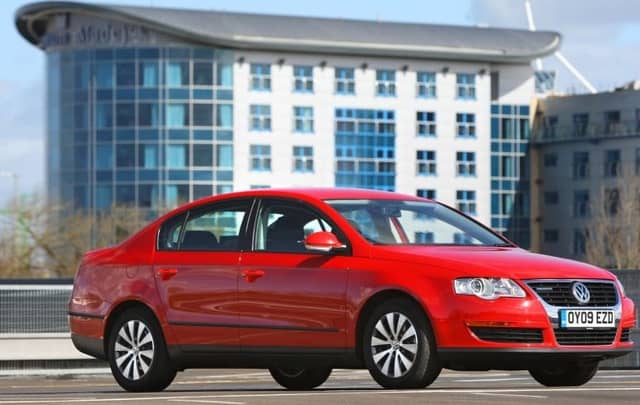

Date Published: 27-May-2010
Is Blue the new Green? Volkswagen’s BlueMotion technology has become somewhat of an industry standard in a short period of time.
Already it has been introduced into the Polo, Golf and the Passat. BlueMotion technology includes: retuned engines, a Start/Stop function, an on-dash gear shift indicator, battery regeneration under braking, low rolling resistance tyres and some body add-ons and changes to reduce drag all with the goal of reducing CO2 emissions and lowering fuel consumption in these eco-conscious and cost-cutting times. And, you get a discreet BlueMotion badge that tells the World and fellow road users that you are a caring motorist.
There are three models in the Passat range that feature BlueMotion technology. You can have a 1.4-litre TSI 122 bhp, a 1.6-TDI 105 bhp and a 2.0-litre 140 bhp, all with manual gearboxes and all promising the same refinement and comfort as the standard Passat equivalent.
You can also get the Passat with 6- and 7-speed DSG automatic transmission depending on the model you choose. But it is for the cars environmental claims that the BlueMotion range is mostly marketed and it is against those and the cost of delivering those credits that we must look at the Passat BlueMotion.
To put the cart before the horse here, the results are impressive. The figures do hold up to all intents with the fuel consumption after a week in the 1.6-litre TDI coming in at a healthy 5.4L/100kms. Volkswagen do claim that this car can deliver 4.9L/100kms so any observer of such claims from any car maker will tell you that that constitutes an excellent return.
Talking to others in the office here about the Passat BlueMotion, all mention the fuel consumption first and all returned similar figures and that kind of consistency across a eclectic bunch of pilots like the Fleet Transport test drivers suggests that Volkswagen have their figures nailed.
The only true measurement of any car from an ownership view point and a cost of ownership perspective is that it delivers what the manufacturer promises. Or, that over-used phrase that ‘it does what it says on the tin’.
From the fuel economy angle Volkswagen’s claims are as good as their word. Official CO2 emissions are 118g/km which puts the Passat BlueMotion firmly in the Band-A tax bracket and an annual Road Tax bill of €104. The technology also ensures that the engine is Euro 5 compliant.
On the road, there are some obvious differences that way the Passat BlueMotion performs compared to a regular specified Passat 1.6. You will notice little around town to tell them apart. However, if you try to follow the instructions of the gear shift indicator all the time, you will drive yourself insane although it will make a big difference to the fuel economy.
But, take it from me it is not worth it. Out on the open road you will detect the results of the detuning of the engine. Acceleration from 0 to 100kms is 12.4 seconds with maximum torque of 250Nm between 1,500 and 2,500 rpm.
There’s little need to remind you that the BlueMotion Passat carries all the structural, safety and aesthetic traits present in all Passat models. In the BlueMotion the Start/Stop function works exactly the same way as other systems of this type operate with the engine cutting out if you stop in traffic and engage neutral, restarting again as soon as you press the clutch. You know it’s active when the Start/Stop symbol is shown on the multifunction computer display.
The battery regeneration allows the battery to be charged by recovering energy under braking and the low rolling resistance tyres help the drag co-efficient. There are some who say that grip is reduced with these tyres. Logic would conclude that this should be the case. However, both Volkswagen and the tyre manufacturers don’t believe they do. There was no noticeable evidence of lesser grip during my week with the car although the weather that week was generally dry.
Gerry’s Rating 7.5/10