

Axe hangs over Galway Bord na Mona workers

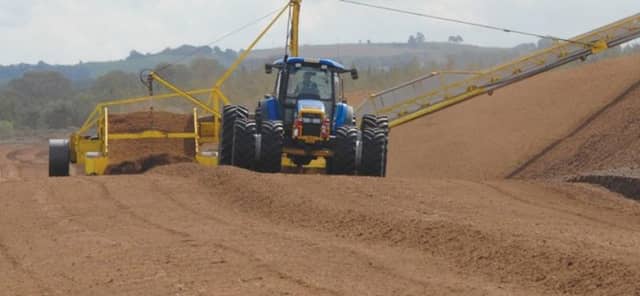

Around 70 Bord na Mona workers in Galway should know within the next six weeks whether they are to lose their jobs as part of the State company’s plan to end peat cutting in almost a quarter of their bogs.
Bord na Mona has announced that it is to begin consultations with unions about a voluntary redundancy scheme, with 150 jobs expected to be lost before Easter next year.
A source in the power and fuel company said they had not yet decided which of the 17 bogs – out of the 62 mainly across the Midlands – would close. Harvesting at the remaining 45 is expected to stop by 2025.
Derryfada in Ballyforan on the Galway/Roscommon border was one of those being considered.
“We have to get into discussions with the unions. There could be a ballpark of 60-70 employees working in Galway. We will have a better idea in the next six weeks,” he told the Connacht Tribune.
“Some of the workers will be retirees or close to retirement age. It has yet to be decided where is the location of those workers affected but the figure of 850 job losses is nowhere near accurate. The reduction is to prepare for the co-firing of our peat stations so we need to cut back production of peat. You’re talking 140/150 workers out of 1,000 working on the bogs.”
Galway-Roscommon Independent TD Michael Fitzmaurice said those who lose their jobs on the bogs have “as good as zero” prospects of finding other work locally.
“The average age of the employees is 55 and all the stats tell you it’s nearly impossible for that age group to get another job,” he stated.
“A lot of these lads are also farming and the fear is they’ll have to move away as farming will no longer be sustainable for them.
“What should happen is these guys be given the opportunity to do rehabilitate the bogs, which would give them 10 years’ work at least. They’re doing it in Attymon. It’s for carbon sequestration so that Ireland can be a real good country for climate change.”
Peat is currently burned in three power stations - Edenderry in Co Offaly, run by Bord na Mona, can burn peat and biomass fuel. Two ESB plants in Shannonbridge, Co Offaly, and Lanesborough, Co Longford have yet to be converted for renewable biomass fuel, which is regarded as carbon neutral.
It is widely expected that those applications will be lodged by the ESB in the next month, according to the senior employee.
Some 40% of the biomass fuel needed for the power plants is grown in Ireland mainly in the form of woodchips and the rest will have to be imported from as far away as Africa and Australia.
Bord na Mona are experimenting with growing other biomass crops such as willow and eucalyptus to ramp up the indigenous biomass industry.
Deputy Fitzmaurice, a peat contractor, said he understands that it’s not currently paying farmers to grow woodchip.
“There’s 3,000 acres being grown at the moment and 500 acres were put back into agriculture. It’s not adding up.
“We’ve gone mad if you ask me. It’s going to cost €60 million more to produce biomass as well as leaving people off and leaving ourselves more reliant on fuels outside the country.”
Marian Harkin, MEP for the Midlands North West, said the Bord na Mona workers who are made redundant could be eligible for assistance under the European Globalisation Adjustment Fund (EGF).
She was the chief negotiator for the European Parliament for the setting up of the current EGF, which is help for workers who lose their jobs due to globalisation or an economic crisis.
“The priority right now is to concentrate on the workers who will be made redundant and to assess their needs and skills and preferences. Then the Department of Education and Skills must put together an application in conjunction with the workers themselves, and their representatives, that will provide the redundant workers with relevant training, upskilling or the possibility of grant aid towards starting up their own business.
“While the normal threshold for applying for the EGF is 500 redundancies, we in the European Parliament have included a measure whereby if the redundancies are less than 500 but will have a significant impact on the local or regional economy then an application can be made. This is most certainly the case in the midlands region for which the latest CSO employment statistics show a significantly higher unemployment rate than the rest of the country.”
She said Ireland had already made a number of successful applications under the 500 threshold including three separate applications for the SR Technics workers.
About 85 workers at the Littleton peat briquette plant in Co Tipperary run by Bord na Móna were made compulsorily redundant earlier this year in a deal negotiated by three unions ahead of the factory’s closure.
Departing staff got six weeks’ pay for every year worked with Bord na Móna, up to a total of 104 weeks - the legal minimum redundancy payment is two weeks for every year. The company agreed to top up their pension by four per cent a year and make other extra payments.