

568-bed student complex at Terryland okayed after appeal is rejected

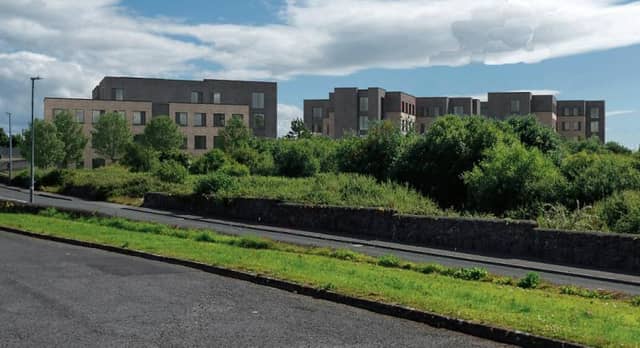

The way has been cleared for the building of a 568-bed student accommodation complex on the outskirts of the city at Terryland after an appeal by local residents against the scheme was rejected.
An Coimisiún Pleanála has upheld the decision of Galway City Council to grant planning permission for the multi-million euro 84-apartments development on the Coolough Road.
It turned down an appeal by residents of Crestwood, Tirellan Heights, Castlelawn Heights and the Dyke Road and Menlo areas, who have strongly opposed the huge project, which will range in height from two to five storeys.
The final go-ahead for development by McHugh Property Holdings, on a six-acre site close to the junction with the Dyke Road, is the second large student accommodation complex on the immediate area to be approved by the higher planning authority.
Last October it rejected an appeal by local residents against the granting of planning permission for a €21 million 255-bed scheme, ranging from one to four storeys high, directly across the Coolough Road from the McHugh development – currently under construction, it is expected to be ready for occupation by January 2027.
Both developments will be used as tourist accommodation outside of college term.
Galway City Council had received 39 observations from individuals and residents associations in relation to the McHugh proposal, which involves the demolition of two dwellings on the site as well as road improvement works along the nearby Dyke Road.
In their appeal to An Coimisiún Pleanála, the association representing residents in neighbouring estates insisted the development would be totally out of proportion with the area, entirely change its mature residential character and the planned provision of just 16 carparking spaces would lead to an overspill of parking locally.
However, a Planning Inspector appointed by An Coimisiún Pleanála, Stephen Rhys Thomas, recommended granting permission for the complex, addressing the grounds of appeal in the course of a 165-page report.
He said that the site was located on lands zoned for residential purposes. “In terms of overconcentration and actual need, I am satisfied that student housing is needed in Galway City and that the provision of student residences at this location will not adversely impact the amenities of the area.”
On the question of pedestrian and cycle safety, which the objecting residents had also raised as a concern — particularly on the narrow Dyke Road that students would walk or cycle on to the University of Galway, he wrote: “Based upon my experience of walking form the site to the university in a wet and windy day, I am satisfied that the proposed site is entirely acceptable and should be considered to be an appropriate location. The walking environment is moderately well served, except along Dyke Road, where improvements are planned as part of this application.”
Mr Rhys Thomas also felt that a sufficient amount of car parking space had been provided, despite concerns raised about an overspill of parking in neighbouring estates.
While the applicant had stated a willingness to provide an additional ten spaces to accommodate summer parking and a bus pull space, “given the public realm improvements planned (new bus stop and works along the Dyke Road) I do not see a need to provide the additional ten car parking spaces within the site at this time””
He said that the proposed development was for student residences, “where the primary method of accessing the site will be by public transport, walking and cycling”.
Accepting his recommendation, An Coimisiún Pleanála granted planning permission for the development, subject to a number of conditions.
“The Commission considered that, subject to compliance with the conditions set out below, the proposed development would not seriously injure the residential or visual amenities of the area or of property in the vicinity, would be acceptable in terms of urban design, height and quantum of development, and would be acceptable in terms of traffic and pedestrian safety and convenience.
“The proposed development would, therefore, be in accordance with the proper planning and sustainable development of the area,” it ruled.
Pictured: How the new student accommodation complex will look.