

Mountaineer Paddy is still scaling the heights at 80

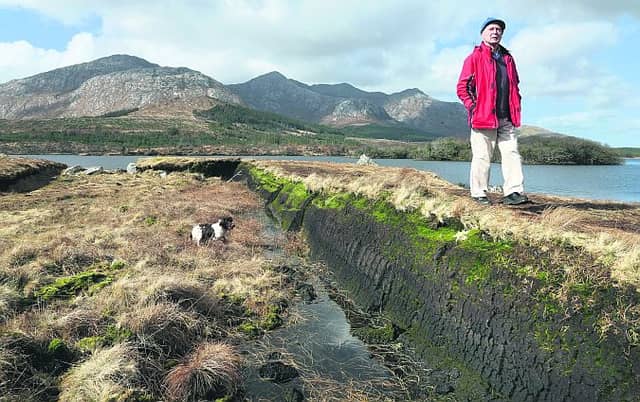

Lifestyle - Judy Murphy meets a veteran hillwalker still with pep in his step and a book just published
Paddy O’Leary bounds up the stairs of McCambridge’s Restaurant on Shop Street with a spring in his step that belies his years. He’ll be 80 in a couple of months but could pass for 10 years younger.
Kerry born Paddy who now lives in Salthill is – literally – a walking advertisement for hillwalking, a pursuit he has been passionate about since he was 17.
That passion has seen him write The Way We Climbed; A History of Irish Hillwalking, Climbing and Mountaineering, which is a detailed, often colourful account of an increasingly popular pastime. This history spans the period from the 1870s right up to contemporary times, chronicling the achievements of Irish mountaineers at home and in far-flung corners of the world from Asia to South America and Africa.
Paddy sees the book as just being “a start”, and expects others to have their own contributions to make in future.
“The nature of mountaineering is that it takes people out of sight,” he observes, so it’s likely he’ll get people saying “you left this or that out.”
Indeed, just after the book went to print he came across an article about a hillwalker in Wicklow from the early days of Irish climbing – it was someone he hadn’t been aware of and understandably, he was annoyed.
Such omissions aren’t due to lack of thoroughness on his part.
There was, he says “a fair amount of research and interviewing” involved.
Here in Galway Paddy used local sources, including the Connacht Tribune for much of the information relating to Connemara’s hills and the role they played in Ireland’s broader history as well as that of hillwalking.
But much of his research involved trips to Dublin and he also travelled further afield to interview past and present climbers and people associated with them.
As someone who has climbed mountains all over the world including leading the first Irish expeditions to the Himalayas and Peru, travelling was not a burden to Paddy, whose day job in his youth was as an electrician. He later went to university and has completed a PhD in on the role of the Irish in India during the time of the Raj, so he is well used to research.
Paddy had been complaining for years that there was no proper history of Irish mountaineering – there was a lack of comprehensiveness in some areas, and a lack of accuracy in others, he says. Friends, who were “fed up” with him going on about it, told him he could sort it.
His research skills and first-hand experience made him ideal for the task. Paddy began hillwalking at 17 when he moved with his parents to Dublin. Having grown up in Listowel, he missed the countryside after moving and started cycling from Dublin into the nearby Wicklow Hills.
From that he joined the fledgling youth hostelling group, An Óige to travel further afield. A person he met in An Óige was into rock climbing and once he tried it, he was hooked.
Paddy explores how that particular pastime has evolved over the decades in the book, which doesn’t “attempt to define the term mountaineering’, but instead covers everything from hillwalking in Connemara to Himalayan challenges and outdoor rock climbing.
This book adds to the archive that already exists of mountaineering in other countries, where it has been well documented, he explains.
In Ireland – as in Britain and Germany – the early days of the sport were dominated by people from the middle and upper-middle classes.
That wasn’t surprising, he remarks, as working-class people couldn’t afford to engage. They didn’t have the money and they certainly didn’t have the time, as there were no statutory holidays.
For more, read this week’s Galway City Tribune.