

Just be wary of that wrist pain, skin spot and muscle twinge


Country Living with Francis Farragher
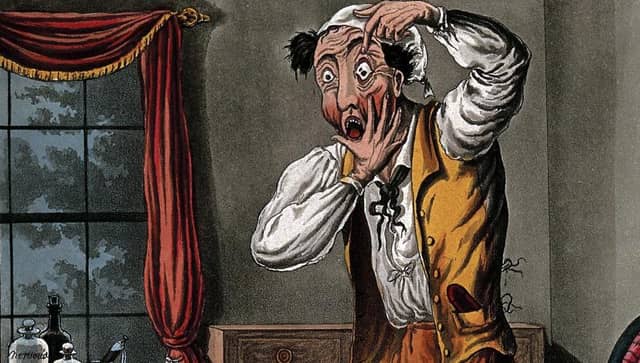
THERE I was last week in a newsroom that’s not so crowded anymore since the ‘Covid Revolution’ changed our working ways, when out of the blue, I was ‘hit’ with a two-minute bout of sneezing and coughing. Jeez, it seemed bad, and thoughts of impending lung diseases and pneumonia started flooding into my mind. Sure, what else could it be?
A few minutes later, the other few souls that frequent the office these days, obviously inspired by my sneezing bout, emulated my symptoms, and then the penny dropped that we had all picked some mysterious virus of a wicked nature, which would kill us off in a matter of days. Then, I settled down, got on with whatever story I was writing, and within 20 minutes, thoughts of my impending doom had completely evaporated.
I blame this condition, which I have diagnosed as intermittent hypochondria, on some of my acquaintances, who often relate life-threatening ailments to me and also remind me of the signs that I should note of my impending demise. Years and decades on though, all of them, thankfully, are as ‘healthy as trouts’, but they have always stopped short of admitting to any positivity about their wellbeing.
Someday, of course, given the certainty of our mortality, our worst fears are going to be realised, and I couldn’t help but delve a little deeper into the epitaph story of writer, comedian, and Goon, Spike Milligan, whose worst fears were realised on February 27th, 2002, when he passed from this life.
Supposedly, his headstone contains the line: “I told you, I was ill,” but when various people visit his grave, and look at the grave, there’s no mention of that phrase . . . in the English language.
Cemetery regulations at St Thomas’ Graveyard in Winchelsea in East Sussex ruled against such an inscription, but Milligan, being a crafty hypochondriac and an honorary Irish man, got over that little problem, by inserting the same sentiment, but expressed ‘as Gaeilge’, on his headstone which reads: “Dúirt mé leat go raibh mé breoite” which of course translates as: “I told you I was ill.”
The Gaelic version was apparently acceptable to the cemetery authorities, probably on the basis that 99% of people looking at it wouldn’t have a clue as to what it meant. It wasn’t the only piece of Irish on his headstone which also contained a love note to his wife, which read: ‘Grá mhór ort Shelagh'.
Anyway, as someone who has survived a myriad of scans, X-rays, ultra-sound examinations and cataract issues, there is a consolation of sorts in taking a look back at some of the famous hypochondriacs that have been with us down through history.
Pictured: What next?