

Breaking the cycle of insomnia

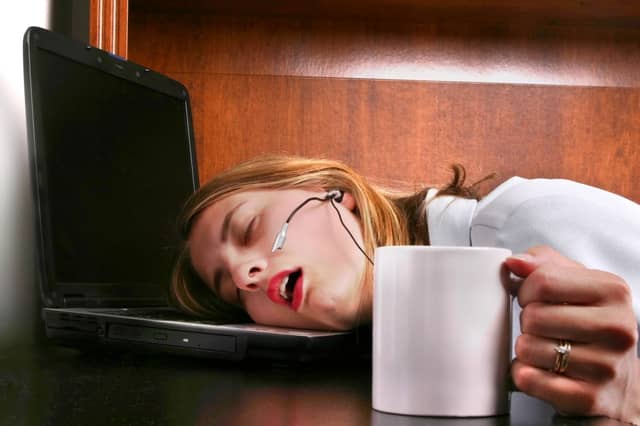

A third of people will suffer with acute insomnia every year, short-term sleep difficulties during times of stress.
Apart from a blip working night shifts while with a 24-hour news agency when I struggled to sleep in 30-degree heat in a Sydney house without air conditioning, sleep has always been my friend.
Then perimenopause descends and the night sweats begin and consistent deep sleep goes out the window.
When I was able to take HRT, it returned regularly enough but then I had to go off it when diagnosed with hormonal breast cancer.
So sleep is once again a blanket I struggle to snuggle under.
I'm not alone.
A third of people will suffer with acute insomnia every year, short-term sleep difficulties during times of stress.
Galway sleep expert Siobhan Lally explains that during stressful periods, our brains try their best to process and sort out problems and will use all available time and space to do that, especially at night.
“This is normal and will usually settle down after a couple of weeks. Chronic insomnia is defined as having difficulty falling asleep, staying asleep or waking up early in the morning three or more nights a week for three months or more. You don't have to be awake every night to have insomnia, in fact, even people who struggle with insomnia will often have a good night's sleep every few nights.
About 15% of people suffer with ongoing insomnia caused by a variety of factors. Sometimes there is a genetic component, for others it's anxiety or stressful life events that cause ]sleep difficulties. For the unlucky, over time that develops into a chronic insomnia problem.
The drop in oestrogen and progesterone around menopause can also cause sleep disturbances which may settle in time or continue for months and even years.
Siobhan qualified as a Sleep Physiologist in 2003 and worked in the sleep laboratory in Merlin Park hospital for 12 years, scoring sleep studies and initiating people on CPAP therapy for Obstructive Sleep Apnoea, a condition characterised by brief interruptions of breathing during sleep, which fragments sleep and causes daytime sleepiness.
Siobhan completed the Advanced Practice of Cognitive Behavioural Therapy for Insomnia (CBT-I) and travelled to Philadelphia to complete the Penn Mini Fellowship in Behavioural Sleep Medicine from the Perelman School of Medicine at the University of Pennsylvania.
Cognitive Behavioural Therapy for Insomnia (CBT-I) consists of usually six to eight sessions, to take a history, complete a sleep diary and identify sleep issues and sleep-related worry.
“Sleep education is key to understanding how sleep works, how sleep can become disturbed and how chronic insomnia develops. From here we can look at what people are doing and how people think about their sleep. I create a tailored programme to help people get their sleep back on track. The beauty of CBT-I is that it is a non-medication based, clinically proven and effective method for treating insomnia. It's an approach that helps people understand the relationship between their thoughts, behaviours, and sleep.“We work together to identify patterns that may be getting in the way of restorative sleep and gradually develop a more helpful approach to sleep. The sessions are tailored to the individual, with progress reviewed along the way and strategies adapted as needed.“It's not simply about giving people a list of sleep tips. The process involves understanding what's happening for that particular person and helping them make changes in a supported and structured way. The aim is to help people rebuild a healthier relationship with sleep, rather than feeling that sleep is something they have to fight to achieve. CBT-I isn't about teaching people to try harder to sleep; it's about helping them understand and change the patterns that can keep insomnia going.”The increase in wearables like the whoop and apple watches are contributing to sleep anxiety.
“We all know how powerful sleep is for our overall wellbeing, immunity, cognition, growth and repair and there is an increasing trend towards trying to optimise our sleep. Wearables can give lots of interesting information on our health but a poor sleep score can undermine people's confidence in their ability to sleep. If you feel refreshed when you wake up, you slept well. If someone is worrying a lot about their sleep, my biggest tip is to ditch the smart watch.”
People are at their wits' end when they decide to see a sleep expert, admits Siobhan.
“They have tried everything else, they aren't drinking coffee, they are taking magnesium, they are doing 'everything right' but are still struggling with their sleep. The difference between those things and seeing someone like me is that they have someone to give them a plan and help them to stick with it, someone to answer their questions and explain things to them.”
She now runs the CBT-I service at the ANU Wellness Hub in Barna. One patient named Lorcan attended the clinic after struggling badly with both falling asleep at night and staying asleep.
“In a short period of time, by diligently following her guidance, I experienced an enormous improvement in the quality of my sleep. I found that understanding the reasons behind her advice made it much easier to trust and follow the process. The improvement in my sleep has been quite remarkable.”
One small simple tip to improve sleep is to try keep a consistent sleep schedule—even on weekends. Going to bed and waking up at the same time every day helps train your body’s internal clock, making it easier to fall asleep and wake up naturally.
“Insomnia is a lonely cross to bear as people feel they are very alone in their struggle. Lying awake at night can be cruel,” reflects Siobhan. “Unfortunately, we have to sleep every night. Help is available, and sleep can be recovered with the right support.”
Contact Siobhan Lally on 086 332 1233 or email [email protected].