

Druid and the ties that bind

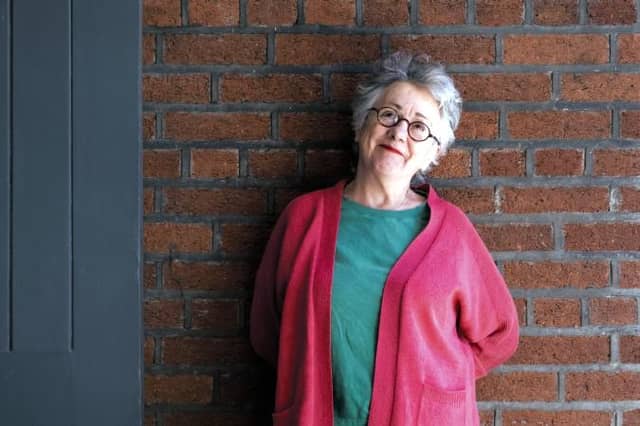

As Druid Theatre marks its 50th anniversary, its co-founder and longtime Artistic Director Garry Hynes talks to JUDY MURPHY about the importance of theatre in an increasingly fractured world and why Shakespeare is as relevant today as he ever was.
“I was the first remote worker,” says Druid’s Artistic Director, Garry Hynes as she sits in the boardroom of the company’s offices on a break from rehearsals ahead of the opening night of Druid’s 50th anniversary double bill, MacBeth and Riders to the Sea.
Garry, who has been at the helm of the company she co-founded for all but four of its 50 years, is referring to her return to Druid in 1995. This followed her time as Artistic Director of the Abbey Theatre, when Maelíosa Stafford took the creative reins at Druid.
When she was in the Abbey – an unhappy time, professionally – Garry bought a house in Dublin.
But then she was approached by the Druid board, seeking her return to the Galway company.
“As I remember it, Maelíosa’s term as Artistic Director was coming to an end and he was always going to go back to Australia because that’s where his family was,” she recalls.
Garry was happy to return, but having bought a house in Dublin, she wanted to continue living there, and the board agreed.
In any case, her second Druid stint was only meant to be temporary, she says with a laugh.
More than 30 years on, Garry is still at the helm and, as she talks of Druid’s future and her desire to bring the company to places in Ireland that aren’t well-served by arts infrastructure, she doesn’t sound like a woman planning to retire.
Whenever she does, the appointment of a new Artistic Director “will be a matter for the board, not for me”, she stresses. And she doesn’t intend “to hang around like Banquo” looking over that person’s shoulder, she adds, referring to the ghost in MacBeth, Druid’s main show as it marks its half a century.
Staging this Shakespearian tragedy for the 50th anniversary is the fulfilment of a long-held wish.
“It’s one of the greatest plays in the English language and the other one is too, but it’s a one-act, she says of JM Synge’s Riders to the Sea, a familiar work in the Druid cannon.
Druid has gained a reputation for its epic productions of Synge, Shakespeare and Tom Murphy, but the company was also always associated with new writing, from people like Murphy Martin McDonagh, Enda Walsh, Christian O’Reilly and, more recently, Sonya Kelly.
In 1998, Garry became the first woman to win prestigious Tony Award on Broadway for directing a play – McDonagh’s The Beauty Queen of Leenane – while Marie Mullen won best actress in the same production.
So did she ever consider commissioning a new work for the 50th?
“No,” she says, adding “If we had had a new play that we thought was ready for production, we would have done it.”
There are half-a-dozen new plays in progress, none of which was ready. But Druid doesn’t commission work.
“It’s less and less used as a method of getting new plays,” she says, observing “a lot of writers don’t necessarily want to be commissioned”.
How plays evolve has changed since Druid began, when they were developed in rehearsal rooms, with the writers. Not so much now, according to Garry.
“New writing now is done in development programmes.”
As for Druid’s own works-in-development, “the new play will be the first thing to be programmed, if it’s here”.
It’s been half a century since the fledgling Druids – herself, Marie Mullen and the late Mick Lally – decided to start a professional theatre company in Galway, and nearly half a century since they “divided the city into quarters” in order to find a suitable home.
Garry recalls “looking through a slot into what is now Druid Theatre”, seeing the high roof of the empty warehouse owned by McDonogh’s, and knowing it was ideal.
She went to McDonogh’s on Merchants’ Road, and made a pitch to its then Managing Director, Donagh O’Donoghue.
Pictured: Garry Hynes: Theatre comes in waves. Who would have expected Druid to appear in Galway when it did? Equally, we don’t know when the next young theatre will emerge.”