

A forecast from Blacksod that changed the course of a war


Country Living with Francis Farragher
I’m often accused – mostly quite jovially – of having a fixation with ‘the weather’ and I suppose like most Irish people I know, a plea of ‘guilty’ has to be entered to the charge. For those of us who have grown up in the West of Ireland, with its wildly contrasting weather patterns, it’s hard for anyone in the region not to have an interest in the skies.
With the passing of time, I’ve changed more into a ‘weather observer’ rather than a ‘weather moaner’ and years back, a friend of mine and meticulous weather recorder, the late Frank Gaffney, used to always gently remind me that we didn’t live in a bad part of the world at all.
He’d point out that we didn’t get heatwaves; only rarely would we get prolonged cold spells; the Atlantic rains always gave us green and productive fields; while Debbie in 1961 was the last real hurricane that we experienced.
Over the past week or so, most of us will have come across the story of a young Kerry woman who on the Saturday morning of June 3, 1944, dispatched a weather observation that was to change the course of history.
Maureen Flavin from Knockanure in Kerry, who was born in 1923, had moved at the age of 18-years, to Blacksod in Mayo where her uncle owned a pub. She applied for the position of a post office clerk there, was successful, and discovered soon after that an important part of her job was in recording and dispatching weather data.
On the Saturday morning of June 3, she left her bed at 1am to take the hourly weather reading at the adjacent weather station.
The location was key, one of the most westerly points along the Mayo coast, and a pretty solid indicator if there was to be any imminent change in the weather conditions. There was! Pressure was dropping; the breeze was rising; and drizzle was starting: early indications of a storm on the way!
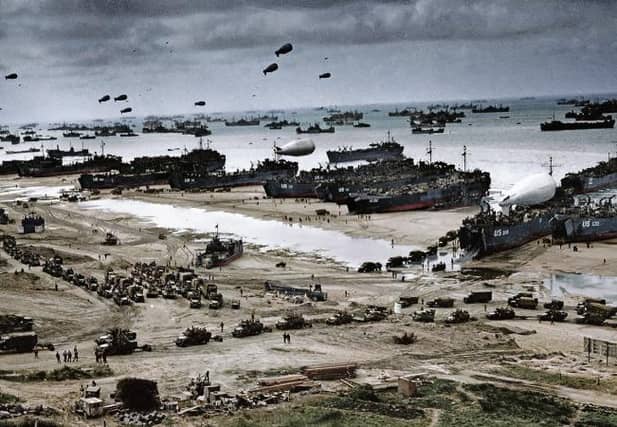
At least two to three years before Maureen made that famous weather reading, Allied leaders and war commanders were planning for the land invasion of mainland Europe, to close in on the Nazi-German army.
In December 1943, when US general, Dwight D Eisenhower, was appointed Supreme Commander of the Allied Expeditionary Force, preparations and hard planning for the invasion of north-west Europe were stepped up. It would be the biggest ever land-sea-air operation in the history of world and was codenamed OVERLORD: apart from the logistical maze of such an operation, there were other features of nature that had to be taken into account such as a dawn start, a rising tide, a full moon, and – critically – benign weather conditions.