

Galway service helping people return to work after a brain injury

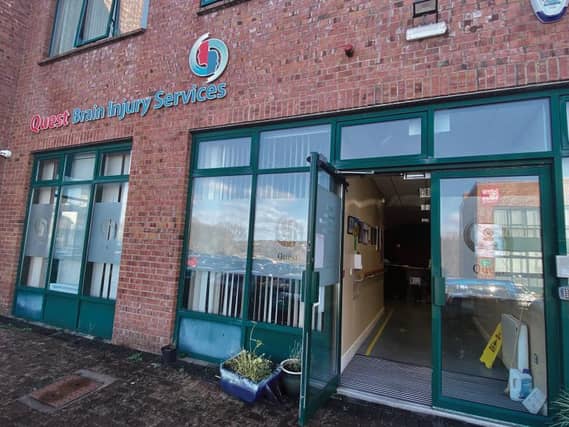

A Galway group providing practical support to people with an acquired brain injury is working with partners across Europe to draw up a standard blueprint to help those left with cognitive impairment to return to work.
Quest Brain Injury Services provide specialised training to around 60 people a year whose lives have been upended as a result of a brain injury. They may suffer from a loss of coordination, poor memory, diminished planning and organisational skills, as well as difficulties in communication and concentration.
The multi-disciplinary team at the rehabilitation service based at the Liosbán Business Park on the east of the city offers occupational therapy, psychology, counselling, lessons in cognitive rehabilitation and lifestyle management.
“It’s kind of a holistic approach to enhance functionality post-medical rehabilitation,” explains Life Skills Instructor, Ciara Hennigan.
“Physically, they might be well enough to be medically discharged but they might suffer from headaches, fatigue, a weakness on one side in terms of movement or mobility or grip. Fatigue and pain, specifically headaches, is a huge part of it.
“Cognitively they might have poor memory, poor attention span, so find it difficult to plan and be organised.
“Noise can be overwhelming. They might have sensory issues so going back to an open plan office may not suit them. They have gone through a hugely stressful event so there’s the emotional consequences – they may have lost their sense of identity, position in the family as the breadwinner, they have to deal with the worry of how they move on from this.
“Even from an organic point of view, they might be more irritable, impulsive, quick to get upset and cry. So we try and address all areas with the team.”
The service, funded by the Health Service Executive (HSE) and delivered through the National Learning Network (NLN) Galway, is free to clients and employers.
Quest is now part of a ground-breaking, European-wide project to assist people injured as a result of an accident or a stroke to secure a job or successfully return to the workplace. Along with partners in the Netherlands, Slovenia, Belgium and Portugal, they will aim to create a standardised roadmap to help achieve that.
“While you have to be able to individualise each plan because two people with the same injury will have very different outcomes and issues, we’re hoping that feedback from all these services will lead to a standardisation of protocols that we can bring into the workplace about what supports are needed,” explained Ms Hennigan.
The range of supports required will vary depending on the client and the type of workplace and work involved.
“It might be looking for a different type of work for the client, or going back to something they’re familiar with prior to the injury. It might be adjusting the work environment so they can have a quiet space or itemising steps so they know what’s expected of them.”
Quest takes in up to 24 new clients a year and some can attend the service twice a week for two years. They also run an outreach service in Mayo and Roscommon where 20 people are regularly helped.
The project is anticipated to run until the end of this year when a final report will be completed.